A Guide to Measuring Employee Relations Impact: How to Get Started
The right metrics can help you demonstrate organizational health, prioritize action and make data-driven decisions. HR Acuity’s Trust & Risk Statement™ offers a tangible way to do that. This guide walks you through how to begin.
How to Begin Making Employee Relations Impact Measurable
Employee relations sits at the center of some of your organization’s most critical risks: cultural, reputational, legal and financial. Yet unlike other core business functions, ER has historically lacked standardized, executive-level metrics to demonstrate its impact. As a result, employee relations teams are often asked to explain complex, high-stakes work using lagging indicators or qualitative narratives in environments that demand data to drive decision-making.
The Trust & Risk Statement™ is here to change that.
Designed to make employee relations measurable and strategic, the Trust & Risk Statement™ translates ER activity into business-relevant insights leaders can act on. It shifts the focus from reactive, after-the-fact reporting to leading indicators that help organizations anticipate risk, allocate resources more effectively and build trust at scale.
This Getting Started Guide is designed to help employee relations leaders take the first step and focus on what matters most — without overcomplicating the work. It provides a clear starting point for aligning employee relations data to business priorities and building a consistent, credible approach to measuring trust and risk over time…even when data and processes are still maturing.
Here’s what you can expect from this guide:
- A clear framework for aligning employee relations metrics to business priorities.
- Guidance on selecting indicators across operational efficiency, trust, risk and compliance.
- Practical steps for auditing data, breaking down silos and establishing a reliable baseline.
- A narrative structure for communicating insights and impact to executive stakeholders.
The Trust & Risk Statement™ Framework
The Trust & Risk Statement is built on a simple concept: Meaningful insight results from consistent, comparable data aligned to business priorities. This framework helps you put that concept into action. It defines the core components of the Trust & Risk Statement and the standardized metrics that make trust and risk measurable across organizations.
Together, they establish a shared language for evaluating employee relations performance, identifying emerging risk and informing executive decision-making. You may already track some of these data points today. Others will require new definitions, cross-functional partnerships or time to establish a baseline. That’s expected.
Operational Efficiency Metrics
Trust & Experience Metrics
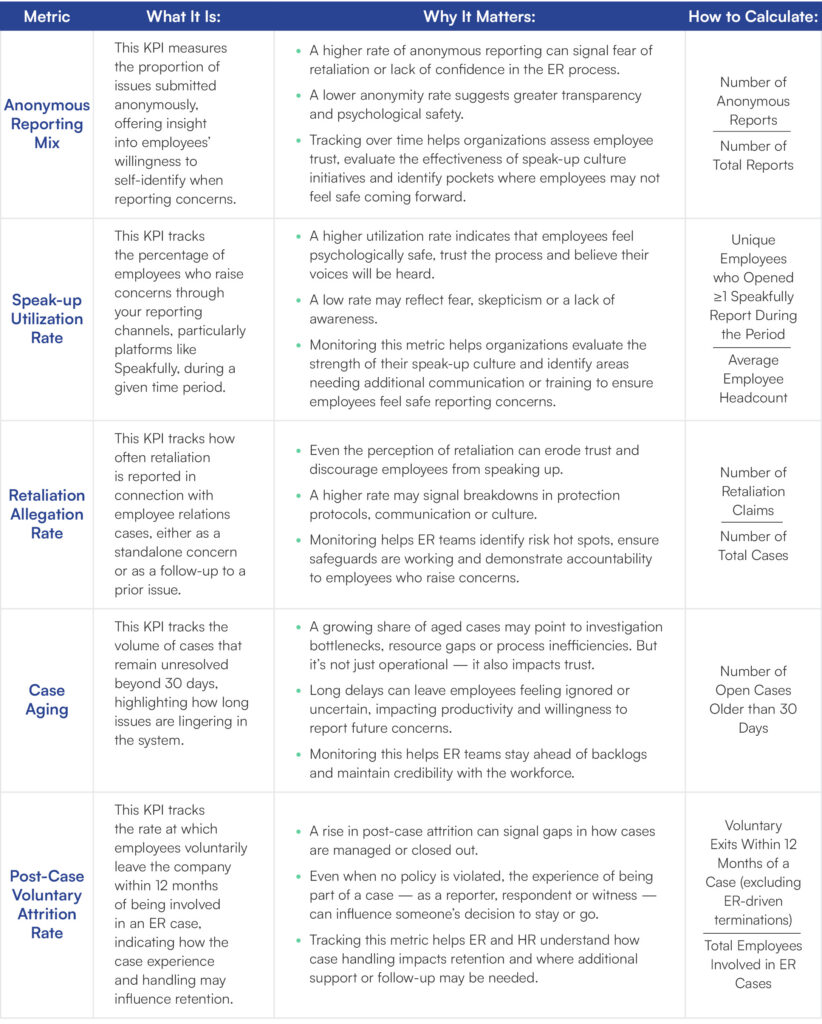
Risk and Compliance Metrics
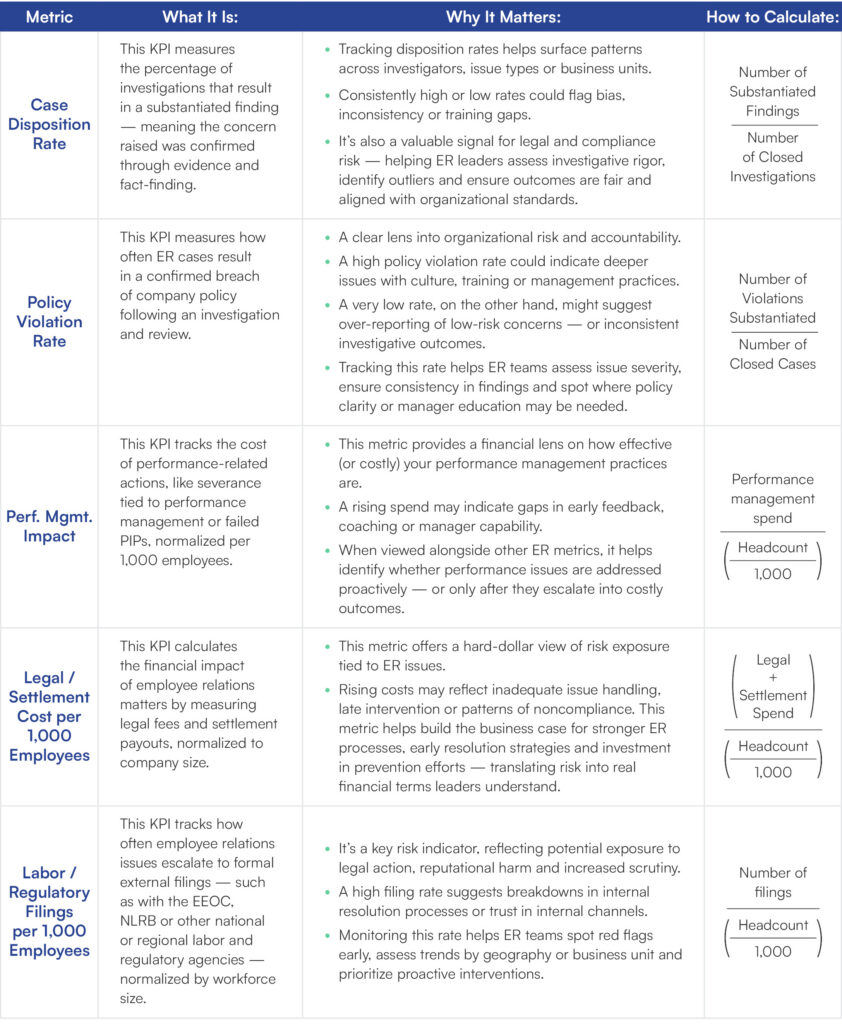

Getting Started
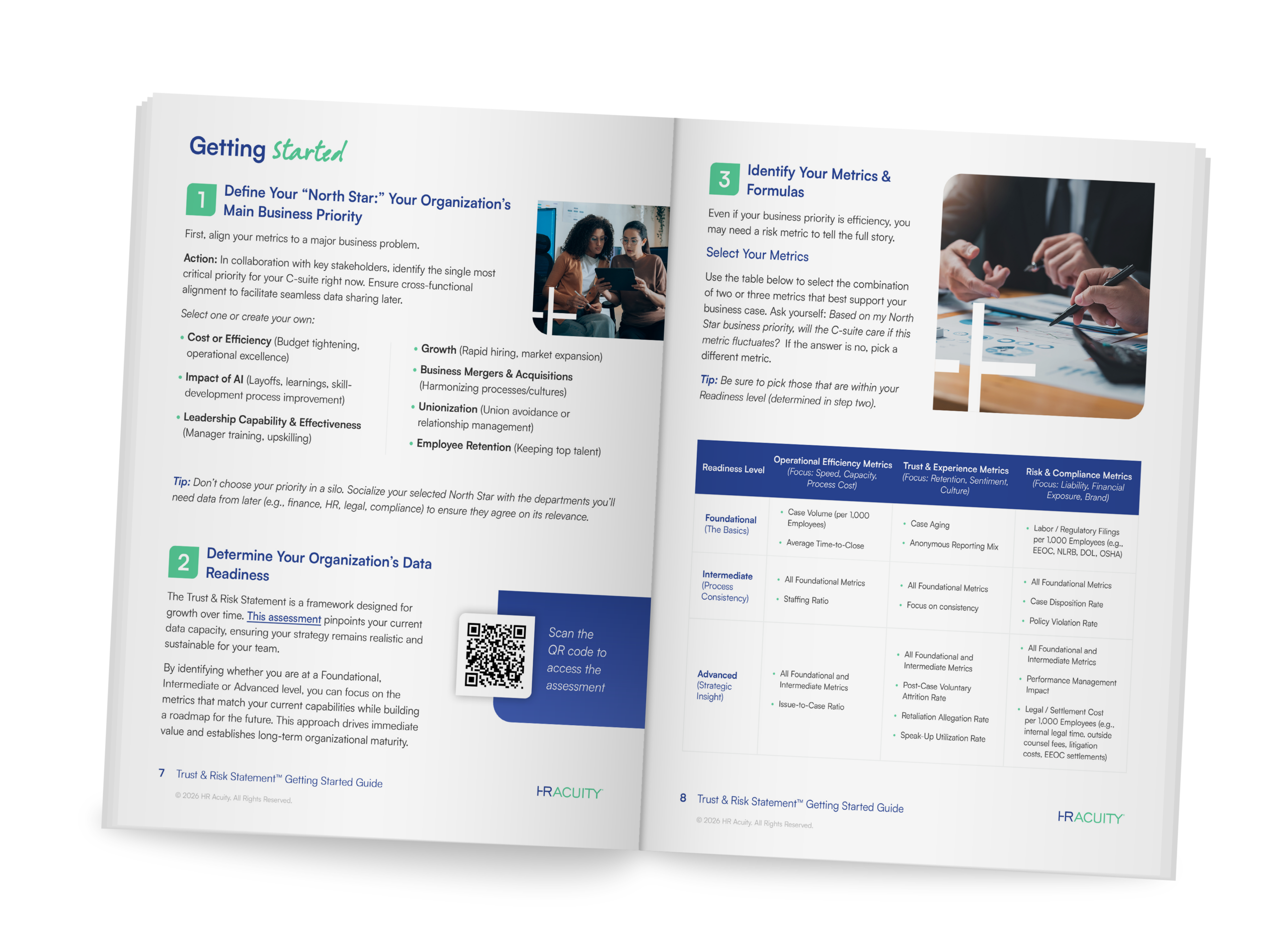
1. Define Your “North Star:” Your Organization’s Main Business Priority
First, align your metrics to a major business problem.
Action: In collaboration with key stakeholders, identify the single most critical priority for your C-suite right now. Ensure cross-functional alignment to facilitate seamless data sharing later.
Select one or create your own:
- Cost or Efficiency (Budget tightening, operational excellence)
- Impact of AI (Layoffs, learnings, skill-development process improvement)
- Leadership Capability & Effectiveness (Manager training, upskilling)
- Growth (Rapid hiring, market expansion)
- Business Mergers & Acquisitions (Harmonizing processes/cultures)
- Unionization (Union avoidance or relationship management)
- Employee Retention (Keeping top talent)
Tip: Don’t choose your priority in a silo. Socialize your selected North Star with the departments you’ll need data from later (e.g., finance, HR, legal, compliance) to ensure they agree on its relevance.
2. Determine Your Organization’s Data Readiness
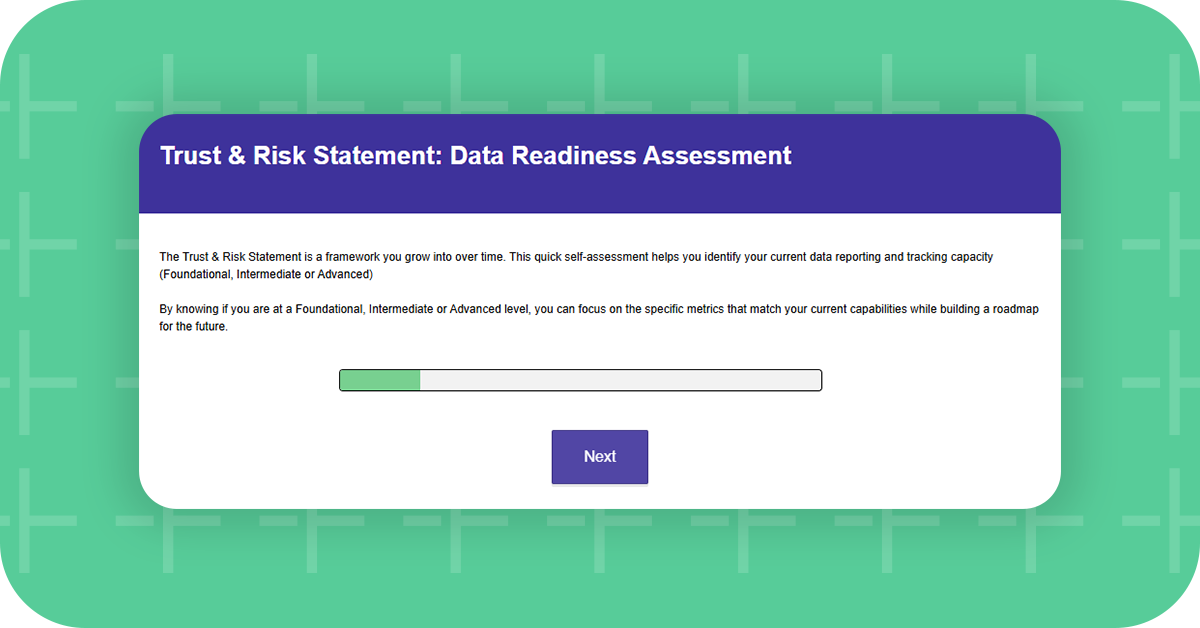
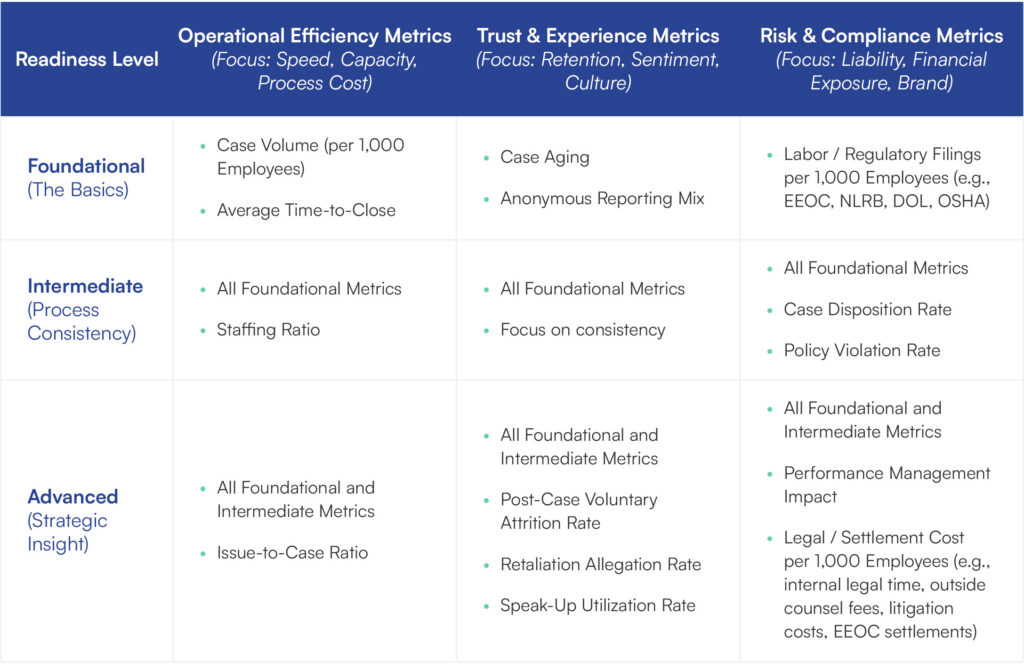
The Trust & Risk Statement is a framework designed for growth over time. This assessment pinpoints your current data capacity, ensuring your strategy remains realistic and sustainable for your team. By identifying whether you are at a Foundational, Intermediate or Advanced level, you can focus on the metrics that match your current capabilities while building a roadmap for the future.
3. Identify Your Metrics & Formulas
Even if your business priority is efficiency, you may need a risk metric to tell the full story.
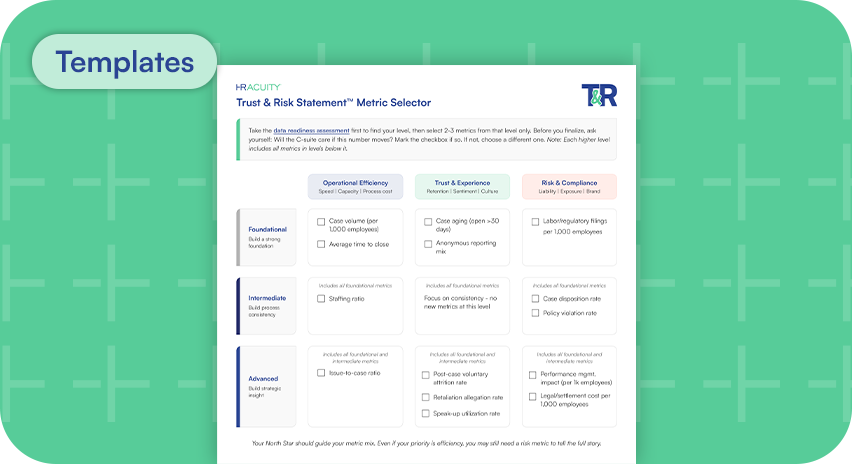
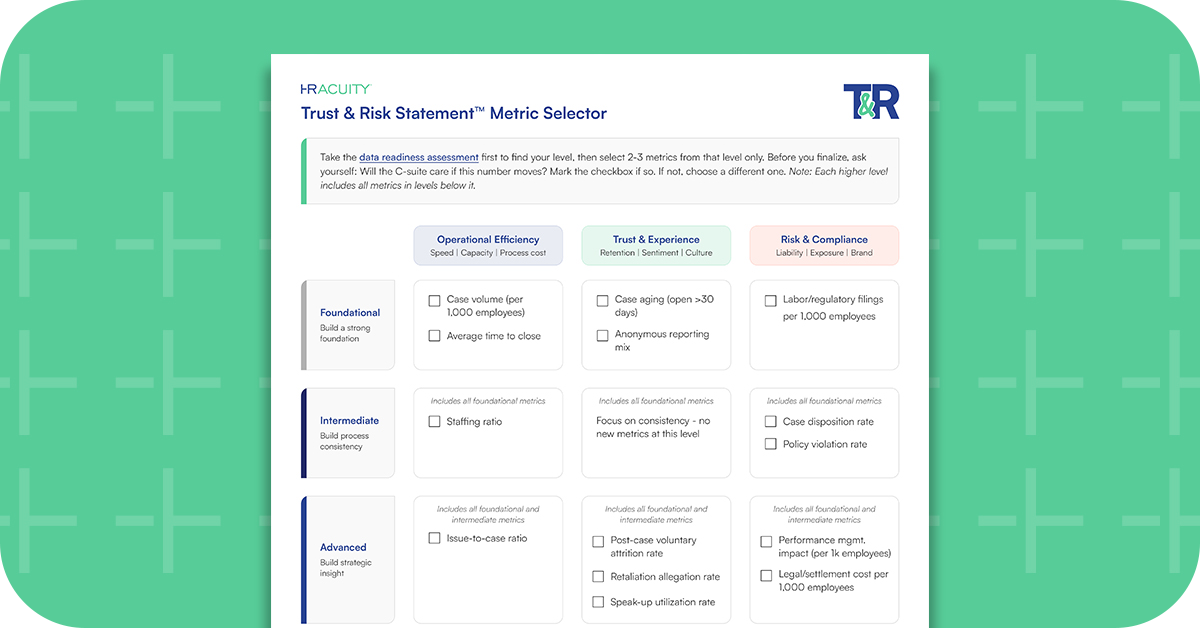
Select Your Metrics
Use the table below to select the combination of two or three metrics that best support your business case. Ask yourself: Based on my North Star business priority, will the C-suite care if this metric fluctuates? If the answer is no, pick a different metric.
Find Your Formulas
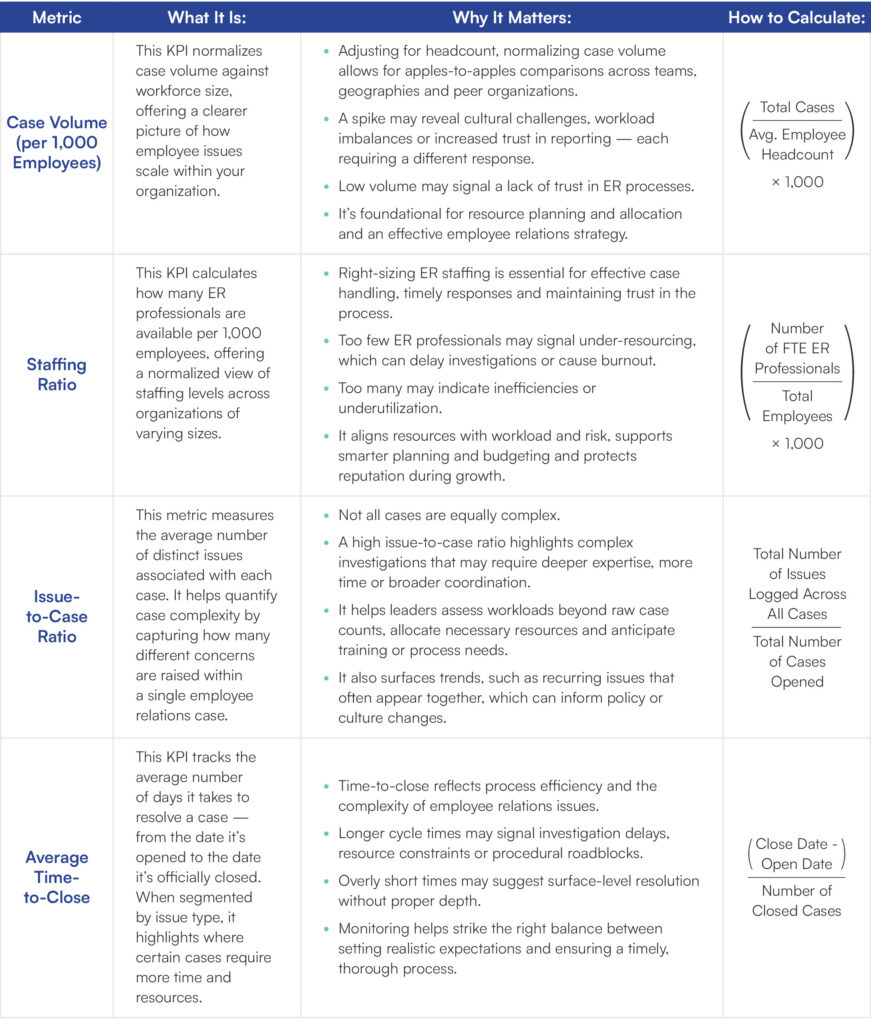
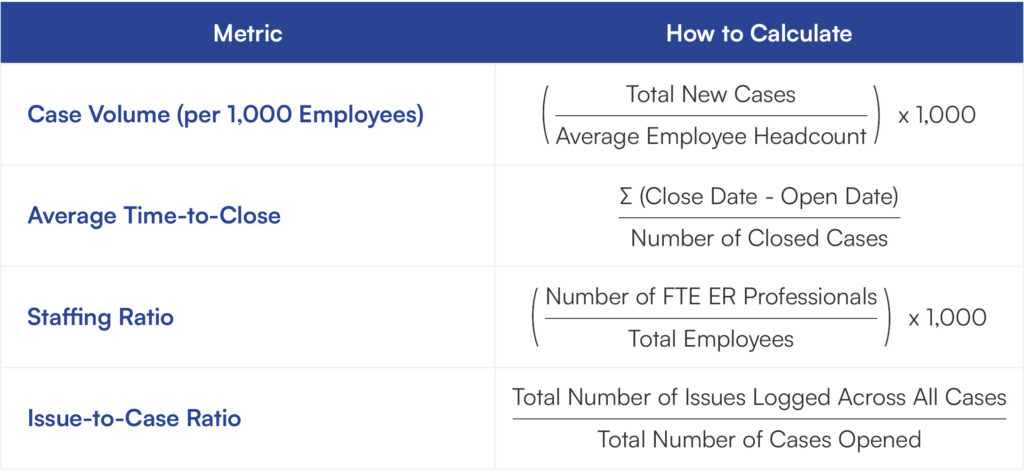
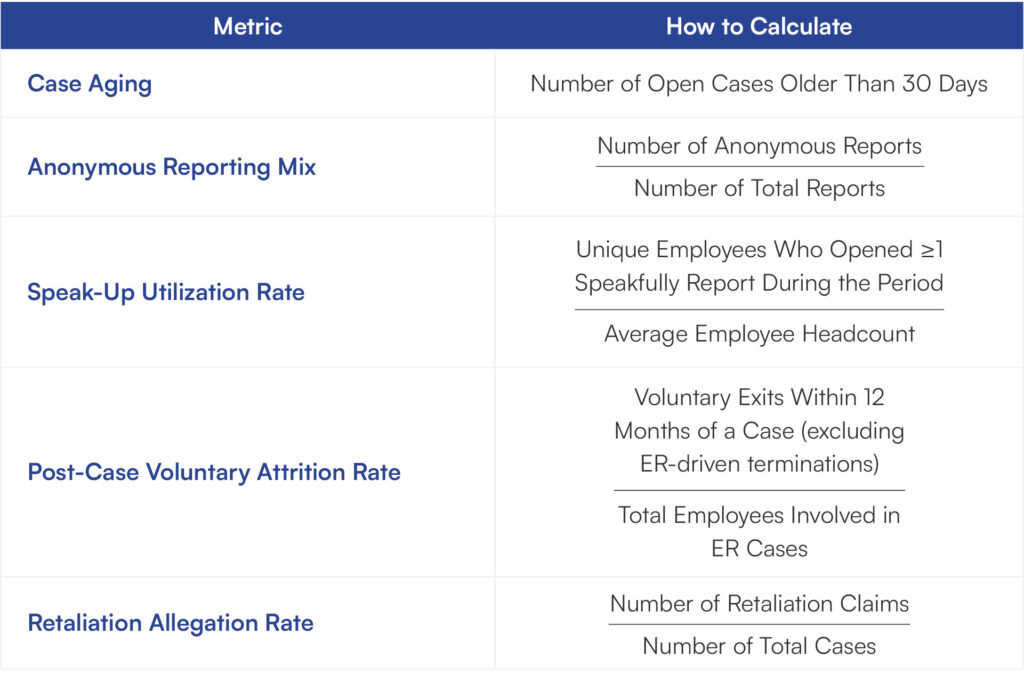
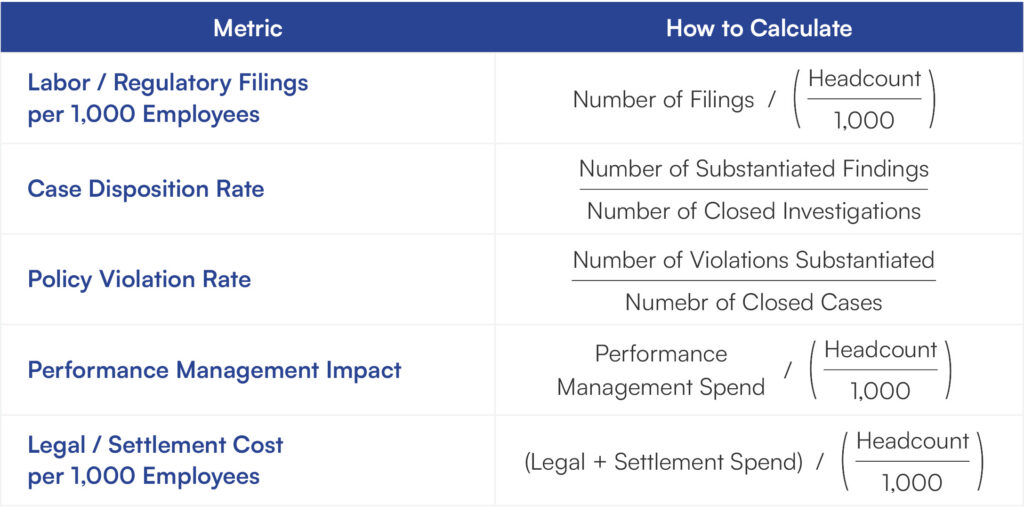
Once you’ve selected your metrics, review the formulas in the tables below. These reveal the specific data points you will need to audit in step four.
PAUSE: Before you finalize your list, look at the variables in the Calculation Formula column. Do these variables currently exist in the data you track?
- IF YES: Keep the metric. You will locate the data in step four.
- IF NO: Either drop it for a simpler metric, or keep it and build a 90-day baseline starting now.
Tip: To uncover meaningful baselines, segment your data by case type, region or function. Blending routine time and attendance issues with complex misconduct investigations hides the insights you need.
Operational Efficiency Metrics
Trust & Experience Metrics
Risk & Compliance Metrics
4. The Data Audit (Breaking Silos)
Now that you have identified the specific data points required, you need to determine who owns them. Review the data points from your selected formulas and ask: Do I own this? and Do I need a partner?
If you need data from another department, frame the request around the North Star you identified in step one.
DON’T SAY: “I need this data for my employee relations report.”
DO SAY: “We are tracking specific risk factors related to [North Star], and combining our data will provide the insights needed to drive better business decisions and demonstrate impact to leadership.”
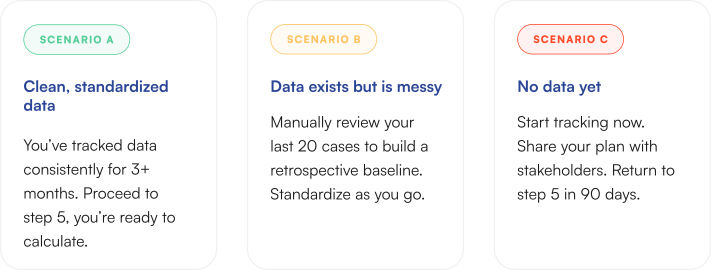
Checkpoint: The 90-Day Standard
Before you begin reporting on trust and risk, you must validate your baseline. That means at least 90 days of clean, standardized data. Identify which segments will be most impactful: function/department, region, and case type.
5. Analyze the Results
Don’t just report the number. Determine if and how it matters — that’s what will get your executive leadership team’s attention.
- Calculate: Apply the formulas from step three to your data set.
- Benchmark: Compare against the previous quarter, industry benchmarks and goals. If this is your first time tracking, this number is your baseline.
- Hypothesize: Diagnose the movement. A high number could mean toxic culture — or simply higher trust in the reporting system.
- Plan Action: Identify areas for improvement and outline initiatives to address them.
Tip: Small variations (<5%) are usually noise. Look for significant shifts before building a narrative.
6. Build the Narrative
Use this framework to structure your executive summary, email or slide.
- The Priority: “To support the organization’s focus on [North Star]…”
- The Data: “…we are tracking [metric name] to identify potential friction.”
- The Analysis: “Current data shows a [trend] in [department/region], suggesting [hypothesis].”
- The Solution: “ER is addressing this by [intervention] to mitigate risk and support business continuity.”
Putting the Framework into Practice
Employee relations work is already shaping trust and risk every day, whether it is measured or not. The Trust & Risk Statement simply makes that impact visible. By starting where you are and applying the framework with discipline, you initiate a virtuous cycle: as we provide greater clarity, our organizations rely more heavily on our expertise, leading to deeper impact over time.
As we build this muscle together, we move the entire discipline of employee relations forward, strengthening our broader community of practice and ensuring the function is recognized as the strategic pillar it truly is.
You don’t have to do this alone.
To see how fellow employee relations leaders are leveraging these metrics and to get hands-on support, check out these helpful resources.
Sign up for our newsletter to stay ahead of what’s new in employee relations.