
Reporting discrimination in the workplace represents a make-or-break moment for employers. What happens afterward, from an employee’s standpoint, can either erode trust or build it.
As discrimination, harassment and retaliation claims soared to an all-time high in 2024, educating employees on how to report discrimination in the workplace has become more important than ever. When employees experience mistreatment, they need to know there’s a safe path to speak up.
That’s why having a clear, consistent process is such a critical responsibility for HR and employee relations teams. Reporting misconduct can be incredibly difficult, often accompanied by uncertainty, fear of retaliation and confusion about what comes next.
The best workplace reporting processes help protect what matters most: Your employees and the organization. Effective systems for reporting workplace discrimination encourage accountability, strengthen trust and reinforce your organization’s commitment to fairness and inclusion.
Key Takeaways: How to Report Workplace Discrimination
- Prioritize employee safety first: Before anything else, check in with the person who came forward, ensure they feel safe and separate them from the alleged subject if needed.
- Document everything in real time: Open a case immediately and treat it as a living document, capturing the who, what, when and where from intake through resolution.
- Loop in legal early: Contact your legal advisor before taking further action to align on strategy, discuss administrative leave and ensure process protections are in place.
- Almost always investigate: When a discrimination claim is involved, a formal workplace investigation is nearly always warranted, not just an employee relations case.
- Fear and unawareness are the biggest reporting barriers: 46% of employees don’t report due to fear of retaliation, and only 56% are even aware that anonymous reporting tools exist, making employee education and trust-building critical.
What Is Workplace Discrimination?
Workplace discrimination occurs when an employee is treated unfairly because of a protected characteristic such as race, gender, age, religion, disability, sexual orientation or national origin.
Workplace discrimination can come from:
- Employers or supervisors: Through hiring, firing, pay, promotions, scheduling or other employment decisions.
- Coworkers: Through harassment, exclusion, bullying or other behavior that creates a hostile work environment.
How to Report Workplace Discrimination: A Step-by-Step Guide for HR Teams
Step 1: Check In First & Make Sure the Complainant Is Safe
Before anything else, your first responsibility is to check on the person who came forward.
Check in with them as a human being, not just as a case. Are they okay? Do they feel safe returning to their workspace, their team or working with their manager?
If the answer is no, or even uncertain, your first step is to separate them from the alleged subject(s) and create a situation where they can continue working without ongoing exposure to harm.
This is the foundation of ThroughCare: Employees need support throughout the entire process, not just at the end. from the initial report, through the investigation and beyond.
This step also includes a documented intake. Keep it focused at this stage. You’re capturing the who, what, when and where at a basic level. Be clear with the complainant that a full, formal interview will follow soon and explain what they can expect from the process ahead.
Setting expectations early is one of the most underrated ways HR can build trust and reduce anxiety.
Step 2: Open and Document the Case, In Real Time
As soon as a concern is raised, a case should be opened, and documentation should begin. This comes down to protecting yourself, your employee and your organization.
If you’re working in a case management system like HR Acuity, you can document in real time as the situation develops, which means nothing falls through the cracks and your record is in real time, and far more defensible than notes reconstructed after the fact.
Documenting the complaint, including the nature of the alleged discrimination, the date and time it occurred and any witnesses, helps you track details and follow up on evidence effectively.
Think of the case as a living document that travels with the situation from intake to resolution.
Step 3: Contact Legal Before You Go Further
This step tends to get buried or skipped, and it shouldn’t be.
Once a discrimination concern is raised and the complainant is safe, your next call is to your Legal Advisor. Let them know what’s been reported, what steps you’ve taken to ensure safety and where things stand.
This conversation does a few things:
- Ensures you have an informed partner before any meetings with the subject’s leadership chain
- Opens the door to discuss whether administrative leave is appropriate — for the subject, not the complainant — as a precautionary step while the situation is assessed
- Helps you enter the next phase with alignment on strategy rather than improvising under pressure.
Having a collaborative legal partner is, at its core, about making better decisions together.
Step 4: Determine the Path Forward: Employee Relations Case or Investigation?
When a discrimination claim is involved, the answer is almost always an investigation. That’s not a reason to panic, especially if you have a purpose-built workplace investigation solution that will walk you through defensible, best practice-embedded next steps.
The distinction between an employee relations case and a formal workplace investigation isn’t about severity. Instead, it’s about the nature of the allegations, the legal exposure involved and the questions that need to be answered. HR Acuity’s ER vs. Investigations infographic is a great resource to help teams make this determination consistently and defensibly.
During this step, make sure you are also in active dialogue with legal, sharing your read on the situation and why you believe a formal investigation is (or, in rare cases, isn’t) warranted.
The legal partner helps you understand what questions must be asked and what process protections are required.
Step 5: Conduct the Investigation
With the path forward confirmed, you move into the formal investigation. This means structured, documented interviews with the complainant, any witnesses and the subject. It also means those interviews are conducted fairly, thoroughly and with a consistent process across every party.
Handling interviews with care, including choosing a private setting and being trauma-informed, promotes trust with interviewees and reduces potential legal risk. Be mindful about the questions you choose.
Throughout this phase, your case management system continues to serve as the central hub, supporting you as you capture notes, evidence and interview records in one secure place.
Providing support to the complainant throughout the investigation process — offering counseling services or other resources as needed — demonstrates the organization’s commitment to addressing discrimination. This is ThroughCare in practice: Consistent communication, regular check-ins and transparency about what’s happening and what comes next.
Step 6: Complete the Investigation Report
Once interviews and evidence gathering are complete, the findings need to be captured in a formal investigation report.
This document should walk through the facts as gathered, the analysis applied to those facts and the findings that analysis supports.
The report is a critical step because it serves as a structured record of how you arrived at your conclusions. If it ends up being reviewed externally, it needs to be able to stand to scrutiny. Thoroughness here is your best protection, and your best demonstration that the process was fair.
Step 7: Communicate the Outcome With a Clear Aftercare Plan
Closing a case isn’t the same as resolving it. Communicating the outcome to the relevant parties should be done thoughtfully and with appropriate confidentiality. Only share what each person needs to know, clearly and without unnecessary detail about others.
And then finally, it’s time for aftercare. That means continuing to provide support and monitoring for retaliation. That gap is where trust breaks down. A strong close to a discrimination case includes a defined plan for what happens next…monitoring for retaliation, follow-up check-ins with the complainant and any corrective actions or policy changes that came out of the findings.
This is how organizations build lasting trust.
Where to Report Workplace Discrimination
There are a variety of internal and external reporting options available to employees who have faced discrimination in the workplace. Many employees aren’t sure where to report workplace discrimination, which is why making options clear is imperative.
- HR department or employee relations team: Internal teams that can document complaints, investigate concerns and help enforce the organization’s anti-discrimination policies.
- Direct supervisor (when they are not the subject of the complaint): A manager can escalate the issue through the proper internal channels and help the impacted employee get the support they need as soon as possible.
- Anonymous reporting hotline or ethics line: Confidential reporting systems allow employees to raise concerns without revealing their identity. Some organizations offer anonymous or named hotlines, empowering employees to speak up however they are most comfortable. It’s important that your speak-up reporting options are multichannel and multilingual to support your entire team.
- EEOC (federally protected; 180–300 day filing window depending on jurisdiction): The Equal Employment Opportunity Commission investigates workplace discrimination claims as required under federal law. If your organization ends up involved in an EEOC investigation, here’s how to handle it.
- State or local Fair Employment Practices Agency (FEPA): State or local agencies enforce anti-discrimination laws that, in some situations, may provide additional protections beyond federal law.
Why Employees Don’t Report Workplace Discrimination
Unaware of Their Reporting Options
For team members who don’t feel comfortable attaching their name to a report, anonymous reporting tools are the best way to come forward. But not everyone knows they exist. According to HR Acuity’s 2025 Workplace Harassment and Misconduct Research, nearly all organizations offer anonymous reporting tools, yet only 56% of employees are aware of them.
Fear of Retaliation
Retaliation remains one of the biggest barriers to reporting workplace discrimination. HR Acuity found that 46% of employees who chose not to report misconduct cited fear of retaliation as the reason. Employees worry that speaking up could negatively impact their career, relationships at work or even their job security.
Employees may fear:
- Being passed over for promotions
- Being isolated or treated differently by coworkers
- Receiving negative performance reviews
- Losing their job altogether
The study also found that only 46% of employees were monitored for retaliation after an investigation, further reducing trust in the reporting process.
Distrust in the Process
When organizations fail to consistently investigate concerns, employees lose confidence that speaking up will lead to meaningful action.
If employees have seen past reports handled poorly or not at all, they assume their report will receive the same treatment.
One of the best ways to support employees who report workplace discrimination is to demonstrate a transparent, consistent process.
Uncertainty About Whether It Qualifies as Discrimination
In some cases, employees may not be sure if what they experienced qualifies as discrimination, and because of this, they are hesitant to come forward. Employees may struggle to determine whether certain behaviors — such as subtle bias, exclusion or repeated inappropriate comments — rise to the level of workplace discrimination or misconduct.
Giving employees examples of what workplace discrimination looks like can help combat this concern.
How HR Acuity Supports Discrimination Reporting and Response
Employee relations teams looking to support employees reporting workplace discrimination need a clear, consistent process to document concerns, manage investigations and resolve cases compliantly. That’s where a workplace investigations tool, like HR Acuity, makes all the difference.
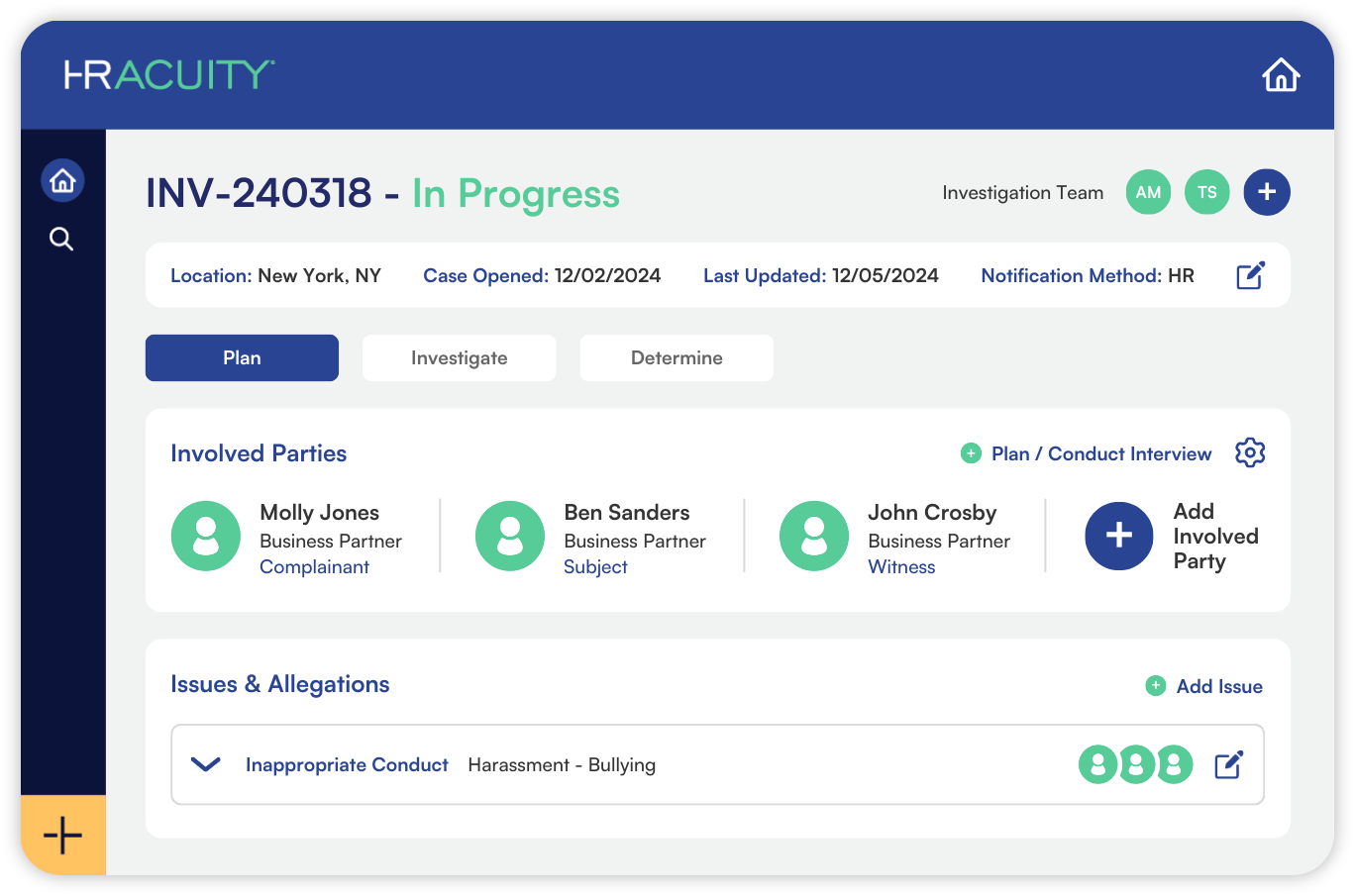
HR Acuity supports every stage of reporting workplace discrimination by providing employee relations teams with a centralized platform to manage reports, investigations, documentation and follow-up actions in one place. Employee reports flow directly into your case management platform, so nothing ever slips through the cracks. Comprehensive in-platform analytics empower teams to identify hotspots so you can act when there’s still time.
If you’re ready to learn how HR Acuity can support your team in handling discrimination the right way, every time, get a personalized demo.