
Let’s be honest: HR documentation isn’t flashy — but it is foundational. The way your organization captures and manages employee issues directly shapes workplace consistency, compliance and trust. It also plays a major role in risk mitigation. That’s why getting the best software for HR documentation is a mission-critical task.
But many teams are still relying on outdated tools (or no real system at all) to document the most sensitive moments in the employee experience. The result? Inconsistent records. Missing evidence. Critical details buried in inboxes or spreadsheets. Or worse, sensitive information falling into the wrong hands.
If your organization is serious about protecting confidentiality, improving outcomes and reducing risk, it’s time to rethink your approach. That’s why more HR and compliance leaders are investing in dedicated HR documentation software — not as a nice-to-have, but as a must-have tool to protect your people and your bottom line.
Ready to dive into the best HR documentation software in 2026? Let’s go.
Key Takeaways: Best HR Software for Documentation in 2026
- The best HR documentation software goes beyond basic note-taking or file storage by standardizing how employee issues are recorded, securing sensitive data with role-based access and encryption, and ensuring records are defensible and compliant with legal requirements.
- Top platforms include structured workflows and templates, AI-assisted interview planning and timeline generation, multilingual reporting, real-time analytics and insights and seamless integrations with existing HR tech stacks to help HR teams document consistently and surface trends before issues escalate.
- HR Acuity’s solution is highlighted as the leading HR documentation platform for 2026, featuring centralized case management, benchmarking and analytics, AI features that support rather than replace human judgment and tools that help managers across the organization contribute to quality documentation.
What Is HR Documentation Software?
HR documentation software helps organizations securely capture, organize and manage employee issues in one centralized platform. Unlike scattered files or ad-hoc processes, this technology ensures documentation is consistent, compliant and easy to access when you need it.
Top solutions go beyond simple storage. They help you:
- Standardize how issues are documented and tracked — creating consistency and supporting compliance
- Protect sensitive information through role-based access and enabling attorney-client privilege
- Provide defensible records that support legal and regulatory needs — and hold up in court
- Take it a step further and to surface trends and risks through analytics and reporting
Some HR documentation tools now include AI features to speed up workflows and guide best practices — but make sure that the platform you’re using does so with humans in the driver’s seat. If your platform makes decisions for you, that’s a problem. Your tools should support judgment, never replace it.

Why Purpose-Built HR Documentation Tools Matter More Than Ever
Workplace issues aren’t just increasing — they’re getting harder to manage. HR teams are dealing with everything from serious investigations to a steady stream of employee complaints, often without additional headcount, according to HR Acuity’s Ninth Annual Benchmark Study. Add in hybrid work environments, constantly shifting compliance requirements and growing pressure for transparency, and it’s no surprise that teams are stretched thin.
And the stakes? Higher than ever. Serious issues like harassment, discrimination and retaliation have hit record levels, HR Acuity’s Ninth Annual Employee Relations Benchmark Study reports. There’s little room for error — and that’s exactly where HR documentation software makes a difference.
When documentation is incomplete, inconsistent or scattered across inboxes and spreadsheets, consequences can include:
- Delayed investigations
- Missed red flags
- Non-compliance with regulatory bodies like the EEOC
- Loss of employee trust
- Reputational and legal risk
In other words, it’s bad news. Not to mention documentation trouble can be incredibly costly — from a reputational and financial perspective. Investing in a successful HR documentation platform helps you mitigate these risks.
Top Features to Look for in the Best HR Documentation Software in 2026
Not all documentation tools are built to handle the complexity and sensitivity of today’s workplace issues. If you’re evaluating your options, don’t just settle for the basics — make sure the system you choose is built for real-world challenges.
Look for a solution that checks all the right boxes with these features:
A Structured, Standardized Process
Good documentation starts with consistency. Look for platforms with built-in templates and workflows that guide users through each step — from intake through aftercare. These tools reduce variability across teams and ensure records are complete, accurate and aligned with your policies.
AI-Powered Writing Support
Intelligent writing assistants can help HR professionals document more efficiently — from interview notes to case summaries and findings. The best tools also embed best practices, like removing gendered language or replacing names with initials to maintain neutrality and confidentiality.
AI-Supported Interview Questions
AI-generated interview questions help investigators ask more focused, compliant questions during interviews — even if they’re new to the process. These prompts support fairness, improve quality and lead to better documentation.
Secure, Centralized Recordkeeping
Your documentation system should serve as a single source of truth for every employee issue, accessible only to those with appropriate permissions. Features like role-based access, encryption, audit trails and secure authentication options are essential for protecting sensitive employee data. And don’t skip over attorney-client privilege either — platforms without it won’t get the job done.
Multilingual and Inclusive Reporting
Successful documentation starts with inclusive intake options. AI-powered translations and multilingual hotline support help employees report concerns in their preferred language — with all submissions automatically translated for consistency in documentation. This is an imperative feature for global workforces.
Real-Time Analytics and Insights
Documentation goes beyond a paper trail — it’s a source of insight. Top platforms use analytics to identify red flags, diagnose trends and highlight hotspots. This helps HR and ER teams take proactive steps before problems escalate.
Platforms that take it a step further offer benchmarking so you can see how your employee relations efforts compare to other organizations of a similar size or industry.
Seamless Integrations
Your documentation platform shouldn’t create more work for you. Nor should it require you to change your HRIS. The best software integrates with your existing tech stack and case management systems, eliminating data silos and saving valuable time.
What Questions Should You Ask When Choosing HR Documentation Software?
Choosing the right HR documentation platform in 2026 isn’t about the flashiest features or the latest buzzwords. It means digging beneath the surface, asking the tough questions and getting confident answers that prove the solution can handle your most sensitive and complex employee issues — consistently and compliantly.
Here are some can’t-skip questions to ask when evaluating HR documentation software:
1. Is your documentation process standardized and guided?
Why it matters: A standardized documentation process ensures that every issue is recorded consistently — regardless of who’s managing the case or where it happens in the organization.
Look for platforms with built-in templates, workflows and prompts that guide users through intake, notes, interviews and outcomes. Bonus if those templates are customizable to align with your organization’s unique policies.
What to avoid: Tools that offer only blank forms or leave documentation entirely up to the user risk missing key details and creating gaps in the record.
2. How does your AI enhance documentation without replacing human judgment?
Why it matters: AI should support, not replace, the expertise of your HR or ER team. The best systems use AI to streamline documentation (like assisting with writing or generating interview questions) while leaving the final decisions where they belong: In the hands of trained professionals.
What to avoid: AI that labels cases or draws conclusions automatically creates legal and ethical risks — especially when managing sensitive employee concerns.
3. What steps do you take to secure sensitive data and ensure confidentiality?
Why it matters: HR documentation often includes highly sensitive information. Strong platforms should offer enterprise-grade security features: Encryption, role-based access controls, secure authentication and detailed audit logs.
What to avoid: Systems that store case files across disconnected email threads, shared drives or use customer data to train AI models. If the vendor can’t confirm that your data stays private, keep looking.
4. Does your tool support global teams and multilingual reporting?
Why it matters: Global organizations need tools that reflect the needs of a diverse workforce. That includes multilingual intake, AI-powered translations and inclusive documentation templates that help create a consistent experience regardless of location or language.
What to avoid: Platforms that only offer support for one language.
5. How are records stored, organized and accessed across distributed teams?
Why it matters: Documentation shouldn’t live in email inboxes or locally saved files. A central platform should house every detail — securely and in one place. It should also allow authorized users to access the right information instantly, with a clear audit trail for every action taken.
What to avoid: Tools that require manual uploads, duplicate entry or scattered storage across multiple systems.
6. Do you offer integrations with existing HR systems?
Why it matters: Your documentation platform shouldn’t operate in a silo. Look for tools that offer seamless integrations with your HRIS, case management or analytics platforms to reduce friction and avoid duplicated work.
What to avoid: Vendors that require complex custom-built integrations may create more work for your team in the long run.
7. Can your analytics surface patterns and trends in real time?
Why it matters: Documentation should do more than record the past — it should help identify potential risks in the future. The best software will turn your data into insights, identifying trends, gaps and recurring issues that your team can address proactively, all within the platform. Bonus points if your tool offers benchmarking so you can get intel into how you stack up compared to your peers of the same industry or organization size.
What to avoid: Static reporting dashboards that only track case counts, without offering meaningful analysis or trend detection.
8. Is your AI explainable and built on expert-backed best practices, not customer data?
Why it matters: Transparency is key. Responsible AI tools should be trained on proven methodology (like investigation standards or ER templates), not your organization’s confidential data. You should always be able to understand how the AI works — and be confident it’s not using your cases to train future models.
What to avoid: Black-box AI with no clear origin or tools that rely on scraping public data to fill in gaps.
The Best HR Documentation Software in 2026
From documenting performance conversations to managing workplace investigations, HR documentation is the foundation of a safe, compliant and consistent workplace. In 2026, the best HR documentation software goes beyond simple notetaking or file storage. It delivers structured templates, secure workflows and built-in intelligence.
Below, we break down the top platforms for HR documentation — and highlight the one that’s purpose-built to handle it all.
1. HR Acuity Is the Best HR Documentation Software in 2026
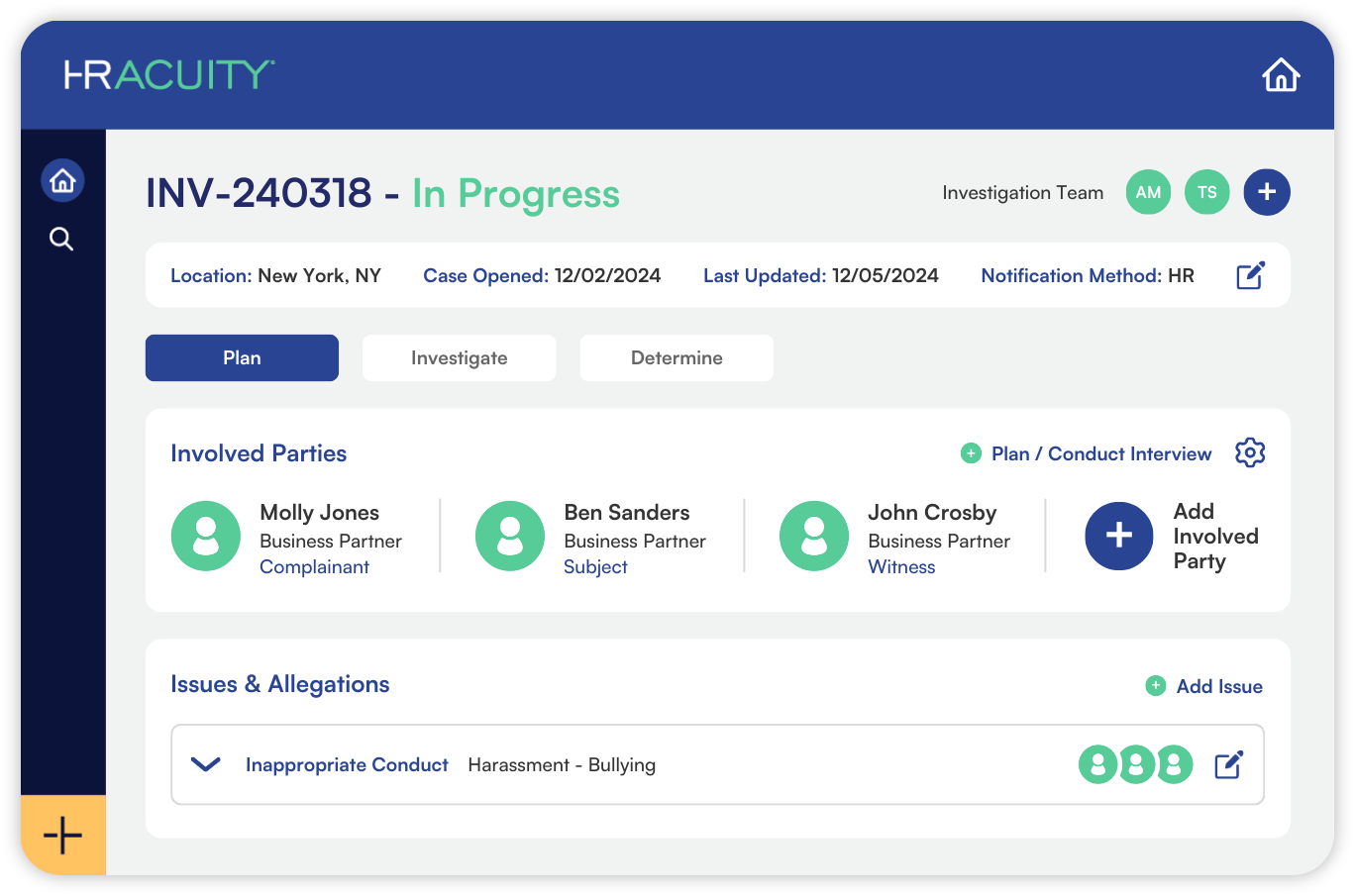
HR Acuity is the leading HR documentation and employee relations platform for enterprise organizations. Unlike generic HRIS systems or case tracking add-ons, HR Acuity was purpose-built specifically to support structured, secure and standardized documentation.
What Makes HR Acuity the Best:
- Standardized Templates Across Issue Types: Create consistent, compliant documentation with templates for employee issues, investigations, accommodations and more.
- Secure, Centralized Case Management: All documentation lives in one platform with role-based access, encryption and full audit trails to ensure confidentiality and compliance — keeping you court-ready.
- Real-Time Analytics and Benchmarking: Track trends across documentation types, issue categories and outcomes to spot risk early and improve decisions. Exclusive benchmarking enables you to see how you compare to organizations in your industry or of a similar size.
- AI-Powered Investigation Planning, Timeline Generation, Interview Question Creation, Writing Assistance and More: Leverage defensible AI to work more efficiently — from generating interview questions and executive case summaries to generating a timeline to spot gaps.
- AI Companion, olivER: HR Acuity’s embedded AI companion, olivER™, also enables you to ask questions about the product whenever you need and allows you to interact with your data conversationally — just like how you would a trusted colleague.
- Whistleblowing, Automatically Documented: Reports submitted anonymously through HR Acuity’s whistleblower software feed directly into your case management system — no copying, pasting or chasing information. Everything is instantly captured, documented and ready for action.
- Manager Enablement at Scale: Equip people leaders with guided documentation tools so HR isn’t the only one responsible for recordkeeping with HR Acuity’s manager support.
- System Integration and HRIS Connectivity: HR Acuity integrates seamlessly with HRIS platforms like Workday, SAP, ADP and more — ensuring your documentation doesn’t live in a silo.
Why HR Acuity Is the Best HR Documentation Platform in 2026
In HR, poor documentation is worse than just inefficient — it’s risky. Generic HRIS tools and patchwork add-ons can’t deliver the structure, security and standardization today’s employee relations demands.
HR Acuity is different. Purpose-built for employee relations, it gives your team the tools to document confidently, consistently and defensibly — all in one secure, centralized platform.
If you’re still relying on spreadsheets, shared drives or software not designed for ER, 2026 is the year to change that.
Hear What HR Acuity Customers Say About its HR Documentation Software
“HR Acuity is magical when it comes to convening all our employee relations records. All written accompaniments to interview, as well as evidence to an investigation, reside in a single safe place. This renders it very easy to draw up a full history in the case of compliance or audits.”
“Prior to HR Acuity handling employee relations cases was a hodgepodge of spreadsheets and emails and other ad hoc documents. What HR acuity has enabled us to do now is to fully centralize all our investigations. Each step is recorded, and each communication is tracked, making an audit trail which cannot be broken. This has almost eliminated our compliance risk and greatly increased the efficiencies in our investigations.”
“I like how we can easily and clearly document information.”
“HR Acuity provides a seamless interface and an exceptional user experience which allows employee relations teams the ability to accurately document, manage and maintain their casework.”
“Our organization has over 12k associates and several brands that are then broken up by geographic location. We use HR Acuity because it effortlessly makes the employee relations job easy to document.”
“HR Acuity provides a great platform for us to document our Employee Relations cases. The involved party history is extremely helpful as it gives you immediate insight into previous cases without having to go search for that information.”
“We needed a more consistent approach in capturing data on complaints and investigations. Using HR Acuity has resulted in a more consistent way in which we document matters. In addition to how we document matters we are also now getting better data analytics and reports.”
“HR Acuity is the easy way to document.”
“HR Acuity makes it easy for our team to document all employee relations and investigation cases. The system is intuitive and the analytics within the system is also impressive.”
“The ability to document workplace issues in one place, accessible from any computer is wonderful.”
2. PeopleVerse
PeopleVerse offers lightweight documentation tools as part of a broader HRIS ecosystem, with the ability to tie notes to employee records.
Pros:
- Integrates easily into existing HRIS workflows
- Customizable fields for team-specific documentation
Cons:
- Limited case management or tracking beyond basic notes
- Fewer built-in compliance features for regulated environments
3. CaseTrail
CaseTrail focuses on documentation for compliance-sensitive industries, offering audit trails and secure case files.
Pros:
- Strong export and audit capabilities for legal review
- Emphasis on defensible documentation practices
Cons:
- User experience may feel complex or rigid to some teams
- Less support for documentation by managers or non-HR users
4. Symply
Symply is a modular HR platform with tools for performance documentation, disciplinary tracking and team workflows.
Pros:
- Flexible plans that work well for smaller or distributed teams
- Includes documentation tools as part of broader HR functionality
Cons:
- Not focused on employee relations or investigations
- Lacks embedded workflows for issue escalation or tracking
HR Acuity Is the Best HR Documentation Tool in 2026
When it comes to HR documentation, cutting corners isn’t an option. HR Acuity leads the way with a purpose-built, AI-powered platform that ensures your documentation is secure, compliant and defensible — protecting your people and your organization.
Trusted by enterprise leaders, HR Acuity sets the gold standard for clarity, consistency and control in HR documentation. Its advanced analytics and AI capabilities empower teams to make smarter decisions and reduce risk — all while offering your team a secure single source of truth.
If your team is serious about improving its HR documentation in 2026, HR Acuity is the only purpose-built choice. Find out for yourself why the world’s leading companies rely on us — schedule your curiosity tour today.