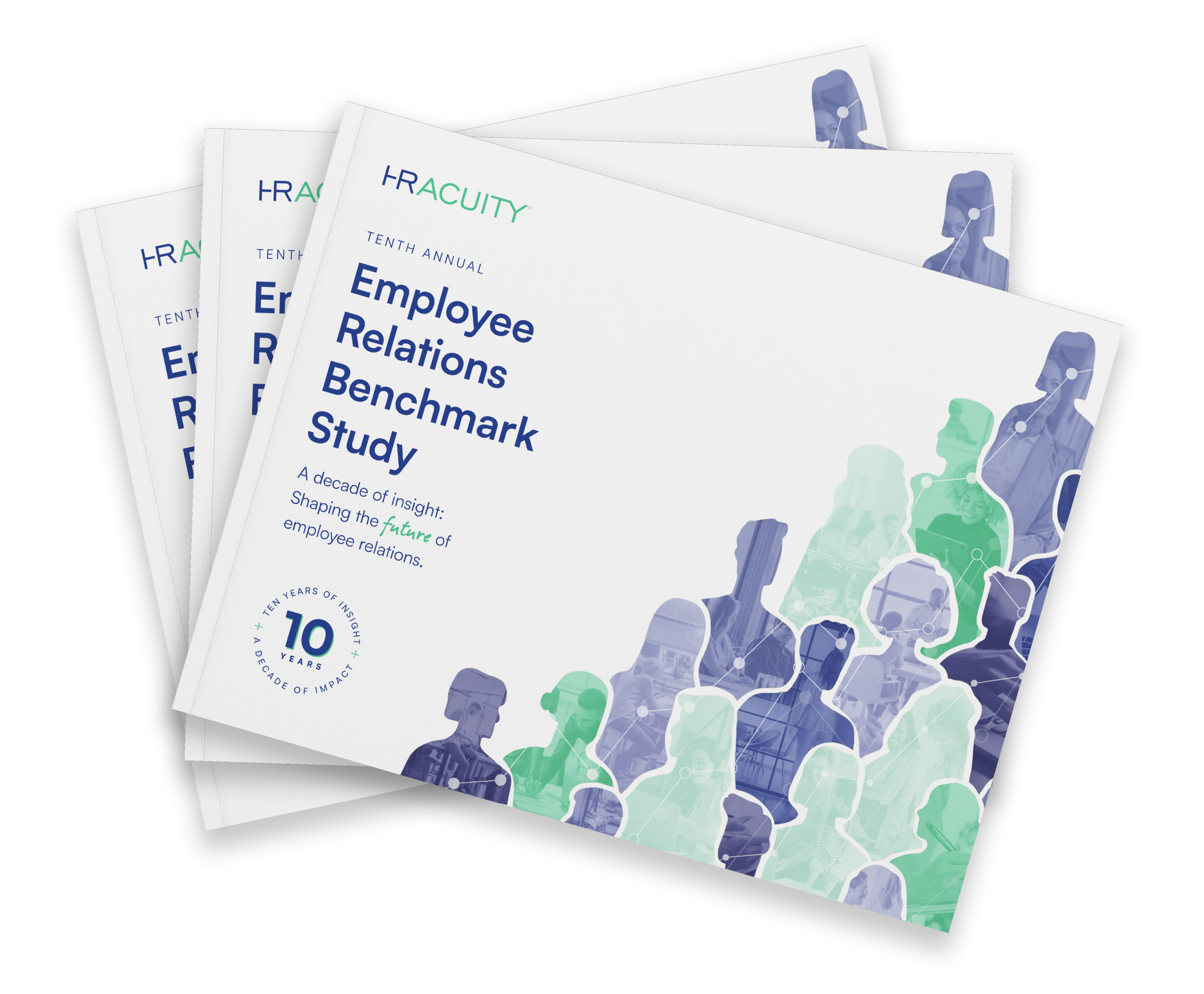
The Tenth Annual Employee Relations Benchmark Study makes it clear that we’ve entered a new era of employee relations. In 2025, employee relations case volumes reached 145.5 per 1,000 employees, while discrimination, harassment and retaliation claims climbed to 15.5 per 1,000 employees, an all-time high.
At the same time, staffing levels remained largely unchanged, with the average staffing ratio increasing only slightly from 0.6 to 0.68 professionals per 1,000 employees.
Employee relations leaders are facing a distinct challenge: More risk, more scrutiny and more responsibility, often without additional resources. After 10 years in employee relations, I’ve learned that these are the moments that define the function.
The good news is that you don’t need to solve every challenge at once. If I were advising a team on where to start, I’d focus on three things.
1. Look Beyond Case Counts
One of the most common mistakes organizations make is assuming they understand employee relations risk because they know how many cases they have.
They don’t.
Case counts tell you volume, but they don’t tell you complexity. The Benchmark Study taught us that 62% of organizations still don’t track issues per case, which means many leaders don’t have a complete picture of the investigative demand their teams are managing.
Your next step: Identify one piece of information you’re not tracking today that would change a leadership conversation. Don’t try to build a perfect dashboard overnight. Start with one meaningful gap and close it.
If you’re not sure how to begin capturing your metrics, check out HR Acuity’s Trust & Risk Getting Started Guide for practical next steps that will help you start small.
2. Use Technology to Create Capacity
Nearly 70% of organizations experimented with or deployed AI for employee relations work in 2025. What’s encouraging is that the most common use cases weren’t decision-making, because I believe AI should never be used to replace human judgement. Teams share that they’re using AI for administrative tasks like drafting investigation reports and summarizing interview transcripts.
That’s a positive step forward.
Employee relations will always require human judgment. But if technology can reduce administrative burden, it creates more time for the work that matters most.
Your next step: Choose one repetitive task that consumes too much time and explore how AI can help streamline it. If you’re unsure of where to begin, check out our empowER community. It’s a confidential space for practitioners like you to share employee relations tips, tricks and challenges they’re facing, including AI adoption.
3. Protect Your Team’s Time
Just one in four employee relations teams plan to hire in 2026. For most teams, meaningful relief isn’t coming in the form of additional headcount.
That means ER teams need to be intentional about where their time goes, and clear about where manager responsibility begins.
Too often, employee relations becomes the default owner for issues that managers should be equipped to handle first. That pulls ER away from the work that requires its expertise. The goal is to give managers the clarity and tools to handle the right issues at the right level.
Your next step: Consider how your organization can use a manager tool to arm your people leaders with the support they need to handle employee issues consistently and confidently, reducing escalation to your team.
A New Era in Employee Relations Requires a New Approach
A decade of Benchmark data tells a consistent story: Employee relations teams are being asked to manage more complexity with limited resources. That reality isn’t changing anytime soon.
What can change is how we respond. You don’t need to fix everything at once. Start with one improvement and build momentum. Then take the next step.
Our Benchmark Study dives deeper into what this new era of employee relations means for your team, and how you can continue evolving your function alongside it. You can explore the complete Tenth Annual Employee Relations Benchmark Study here.