

Tenth Annual Employee Relations Benchmark Study
A decade of insight: Shaping the future of employee relations.
A Message from the CEO
 Ten years of Employee Relations Benchmark data have documented something bigger than a trend line. The Benchmark Study has helped build the evidence base behind the evolution of employee relations from an undefined practice into a discipline with measurable impact on trust, risk and workplace health.
The work began in 2008 with a small set of questions and a network of practitioners willing to share what they were doing. Over time, the questions got sharper, moving from how confident
people felt about their practices to measuring the practices they actually had in place. That shift gave employee relations leaders the data to compare, improve and make the case for their work.
What we built together is the documented evolution of a profession moving from largely undefined to increasingly strategic. This tenth Study represents nearly 9 million employees, more than ten times the population represented in the first Study. That growth reflects the commitment of practitioners who do the work, share their data and help build benchmarks grounded in reality.
The next decade will demand more. Case volume is rising, issues are becoming more complex and AI is changing how teams work and how employees raise concerns.
The good news is that employee relations leaders have better data than ever before. Used well, it can reduce risk, guide decisions and highlight where investment will have the greatest impact. Wherever you are in your employee relations work, you are part of this progress. Use this year’s findings to explore what your data reveals about trust, risk and workplace health, and then act with intention.
– Deb Muller, CEO and Founder of HR Acuity

A Decade of Data
The Rise of Employee Relations as a Critical Business Function
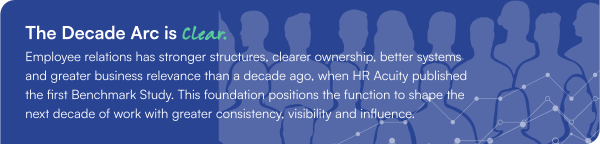
HR Acuity launched the first Benchmark Study in 2016, using calendar year 2015 data, when employee relations was often defined by case response, policy interpretation and localized practices. Today, the function is more structured, more data-enabled and directly connected to decisions about workplace risk, trust and issue prevention.
The progress reflects the intentional work of employee relations leaders to raise the bar. Leaders now look to employee relations for consistent outcomes, meaningful data and insights to shape decisions that reduce risk, strengthen brand reputation and foster employee trust.
The reflections from this year’s participants show six ways the function has evolved over the past decade.
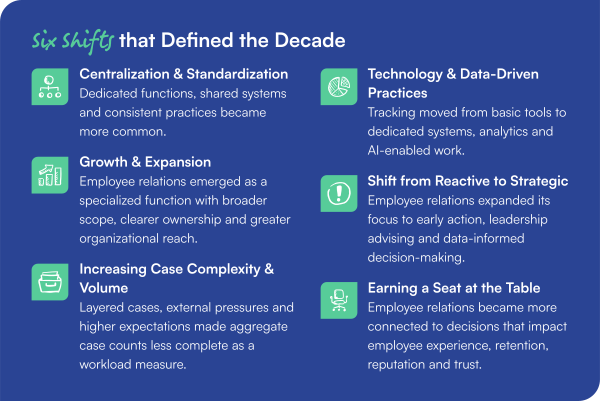
Centralization & Standardization
Structure Built for Scale, Consistency and Efficiency
Centralized and mixed organizational models, already common in the first Benchmark Study, remain the dominant model. But the depth of standardization behind them has changed.
Dedicated teams, shared systems and consistent workplace investigation practices have replaced varied, local handling. That structural foundation helps employee relations leaders identify patterns across cases, support fairer responses to concerns and bring credible data to leadership decisions on risk, resources and workplace trust.
 Gloria Gruber, Assistant Vice President for HR, People and Organizational Effectiveness, Carnegie Mellon University: “Our approach to ER has undergone a significant transformation, moving from a reactive, manual process to a proactive, specialized function. This evolution ensures greater consistency, transparency and protection for both our employees and the organization. The shift is defined by four key structural pillars:
- Digital Transformation: We’ve transitioned from manual tracking, often reliant on spreadsheets and fragmented emails, to a centralized employee relations case management system that allows for real-time data analytics, secure documentation and better oversight of workplace trends.
- Procedural Standardization: The Office of Human Resources has implemented a standardized investigation process to ensure that every inquiry is conducted with the same level of rigor, objectivity and fairness, regardless of the department or individuals involved.
- Dedicated Expertise: Recognizing that workplace dynamics require focused attention, we established a dedicated employee relations position to provide a consistent point of contact and ensure ER matters are handled by a specialist rather than being an ‘add-on’ task for HR business partners.
- Specialized Workstreams: To ensure sensitivity and compliance, we’ve separated investigative responsibilities. General ER matters are handled by HR, while allegations involving discrimination, bias and sexual misconduct are routed to the Office for Institutional Equity and Title IX.“

Growth & Expansion
Employee Relations Became a Specialized Function
As employee concerns became more complex and expectations for fairness and transparency increased, the work required clearer ownership, specialized skills and more consistent support for leaders and employees.
Many organizations formalized employee relations teams, expanded regional or global support and clarified the scope of responsibilities across investigations, accommodations, performance management, policy support and manager guidance. Organizations increasingly recognized employee relations as a defined discipline with distinct skills, data needs and accountability for building trust.
 Nathan Singer, Head of Global Employee Relations, Confluent: “A few short years ago, employee relations was non-existent, and now it’s a well-oiled machine. Increased manager training has enabled faster, more effective accountability for poor performers; managers have just enough training on the basics of ‘tough conversations’ that they don’t need an employee relations person to help them from the beginning.
We’ve seen a cultural shift as well. We’ve enabled managers (and ourselves) to be driven by consistency and best practices vs. fear of ‘doing it wrong.’ We’ve also experimented with taking risks, i.e., terminating an employee who shouldn’t be here despite some perceived risk factors, which has paid off significantly in our culture evolving to ‘holding employees accountable for performance.’ Severance policy/guidelines have evolved significantly. We are now using ‘dual release’ agreements which include time on payroll and severance payment at the end, which virtually guarantees signature; and overall severance costs have decreased.”

Increasing Case Complexity & Volume
Workplace Pressures Are Reshaping Employee Relations
As employee relations became more structured, the work also evolved. Issue volume rose alongside social and political activism, growing awareness of perceived employee rights, mental health challenges and accommodation requests. Cases now routinely include multiple issues, broader context and higher expectations for documentation, fairness and follow-through. AI-assisted complaints are adding another layer. Case counts alone cannot capture the complexity. Without deeper insight into issue-level data, organizations cannot allocate the resources, time and judgment the work demands.
 Laura Brooks, Human Resources Business Partner, Frontier Airlines: “Cases have gotten more complex and increased as employees have more awareness of what harassment is. There is more visibility. I think employees are coming forward more while in the past it was hidden or people moved on. More people are also seeking mental health assistance, and that requires accommodations and a different level of support than in the past.“

Technology & Data-Driven Practices
The Move from Tracking Activity to Delivering Insight
Technology changed the foundation of employee relations work. Tracking moved from spreadsheets and informal systems toward dedicated employee relations case management systems, resulting in stronger practices for documentation, reporting and trend analysis.
AI now extends technology benefits, but the same principle applies: Technology improves employee relations only when the data is consistent, the guardrails are clear and human judgment remains central to the work.
 Rob Peterson, Employee Relations Director, Curaleaf: “The evolution of employee relations has been shaped by several key factors, including emerging technologies such as AI and employee relations technology platforms. These tools have supported a shift from a reactive case-management model to a more data-driven, preventative, and predictive approach.
Using real issue and case data, we’ve developed a risk model that prioritizes sites and leaders by exposure level. From there, we move fast — deploying crossfunctional action plans directly where the risk is highest. At the same time, a rise in employee activism, fueled by the political climate of the past decade, has created new challenges. These pressures have exposed leadership gaps among frontline managers and highlighted the need for more proactive training and development. As a result, our employee relations function has rapidly evolved from a primarily investigative function within HR to a strategic partner focused on engagement, coaching and business advisory support.“


Shift from Reactive to Strategic
Insights Are Driving Earlier Action and Stronger Business Decisions
The role of employee relations has expanded from case resolution into prevention, leadership advising and data-informed decision-making. Respondents describe teams using case data to identify patterns, coach managers, assess policy effectiveness and raise issues before they escalate.
Connecting those signals to proactive initiatives, staffing decisions and leadership action delivers stronger value to the business.
 Abira Balendran, Global Employee Relations Leader: “ER has evolved from a reactive and case-focused function to a strategic, standardized and data-enabled discipline. We’ve increased consistency through global frameworks and operating guidelines, strengthened investigator capability and governance and focused more on procedural fairness and defensibility.”
 Alison Gardyne, Head of Global Employee Relations, Cisco: “At Cisco, our employee relations team is evolving from a reactive, compliance-focused function to a more proactive data-informed partner to the business. We are fostering deeper strategic partnerships, reinforcing trust and psychological safety and utilizing data-driven insights to gain a clearer view of emerging trends. This approach allows us to provide more targeted support to our leaders and ensures our work remains closely aligned with the broader employee experience.”

Earning a Seat at the Table
Employee Relations is Turning Data into Business Influence
The decade reflections show that employee relations now has greater influence on decisions affecting employee experience, retention, reputation and trust. Employee relations data can identify where concerns are escalating, managers need support, policies require attention and targeted intervention can reduce future issues. Turning employee relations data into leadership insight strengthens the function’s influence on business decisions.
Translating patterns into language that resonates with leaders and helping them act on the data strengthens business decisions that create trusted workplaces.
 Andrea Raty, Senior Director of ER, Visa: “The role has progressed beyond policy and compliance into a more strategic partnership. Global insights inform decision making and enable effective outcomes for complex, multilayered issues that require judgment and comfort with ambiguity. Overall, the function delivers less reactive support and greater strategic business value and insight.”
 Maricela Sanchez, Vice President of Employee and Labor Relations, VF Corporation: “Employees understand that the role of ER is a specialized function evolving from the traditional HR capabilities. They look to ER to address workplace concerns with fairness, confidentiality, integrity and empathy.”
Key Findings
Employee relations risk is accelerating faster than organizations can respond.
2025 data reveals a function under mounting strain. Case volumes, misconduct allegations and case complexity are rising in tandem, while resources and processes struggle to keep pace.
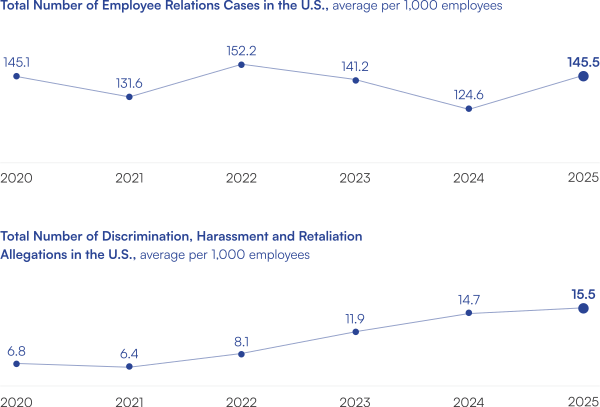
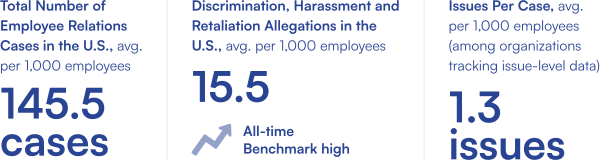
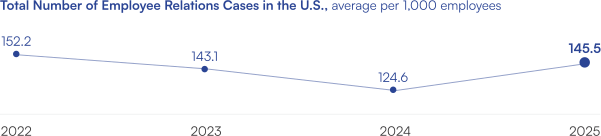
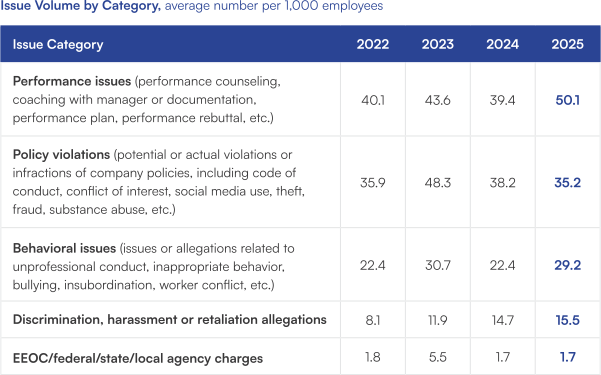
- Case volumes rebounded sharply in 2025, and misconduct hit an all-time high. Discrimination, harassment and retaliation claims surged to 15.5 per 1,000 employees, the highest level in Benchmark history. After a brief dip, ER case volumes reached 145.5 per 1,000 employees, approaching the decade-high set in 2022. Performance issues jumped 27% and behavioral issues climbed 30%, signaling that workplace conflicts are intensifying across the board.

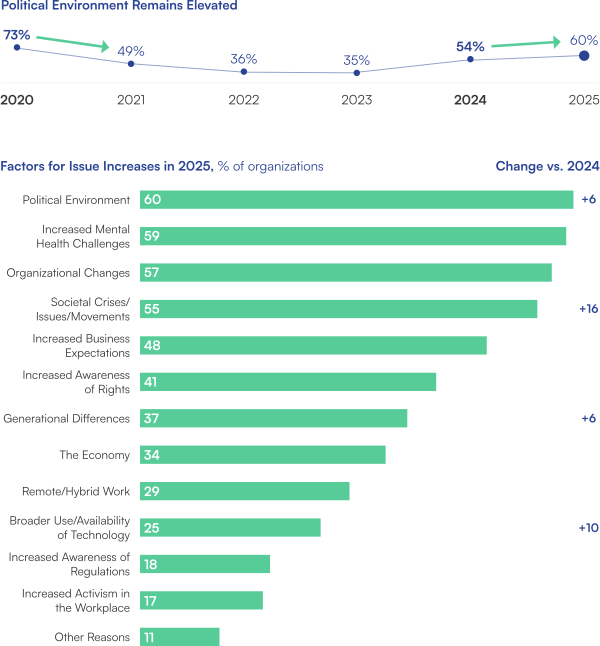
- Social, political and generational tensions are a growing source of employee relations caseloads. ER teams no longer just manage traditional issues; they absorb the weight of what’s happening in the world. Political tensions drove case increase for 60% of organizations, even in a non-election year. Mental health challenges (59%) and societal crises and movements (55%) were cited as top contributors to increased case volume. Organizations also attributed rising caseloads to social media conduct (39%), nearly double over 2024 and generational friction (37%), adding new layers of complexity and blurring the line between digital behavior and workplace accountability.
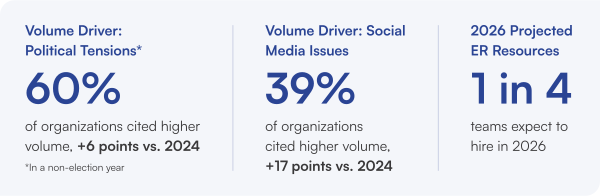
- Staffing ratios have not kept pace with case volumes. Most organizations expect employee relations headcounts to remain unchanged in 2026, despite surging case volumes. Just one in four teams reported plans to hire in 2026. The employee relations staffing ratio edged up only slightly from 0.6 to 0.68 per 1,000 employees; while discrimination, harassment and retaliation cases have more than doubled since 2021. And only 27% of organizations use employee relations metrics to identify staffing needs, leaving most without evidence to justify additional resources. Understaffed teams may be tempted to rely on AI output without disciplined review, increasing organizational risk.

Data blind spots are obscuring the true scale of employee relations risk.
Organizations can’t manage what they don’t measure. Critical gaps in how employee relations data is collected and tracked are limiting the ability to assess risk, demonstrate defensibility and build a culture of trust.
- Case complexity is undercounted. Most organizations (62%) do not track the number of issues per case. Among those that do, the average is 1.3 distinct issues per case, signifying that actual investigative demand is higher than case counts suggest. Employees are increasingly using AI to draft more detailed, legally framed complaints with extensive evidence packages, requiring greater investigative effort to separate fact from AI-generated framing before reaching defensible conclusions.
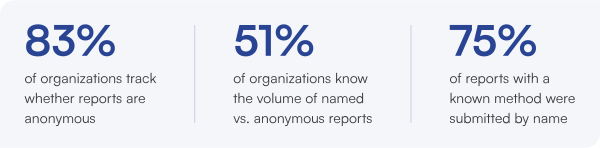
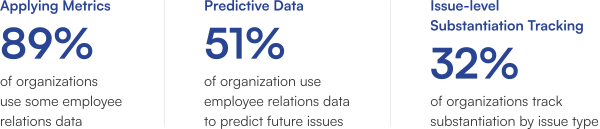
- Anonymous reporting data is incomplete. While 83% of organizations tracked whether issues were reported anonymously, only half of those (51%) knew the breakdown between anonymous and named reports, which is a critical sign of whether employees feel safe coming forward and whether reporting channels are working.
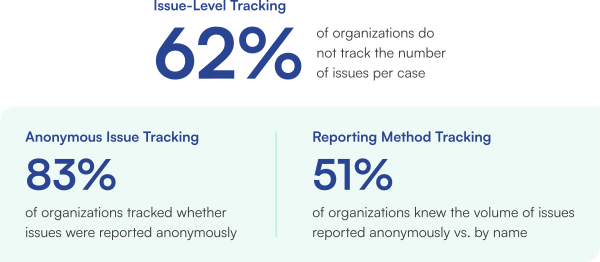
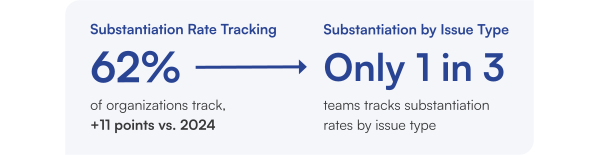
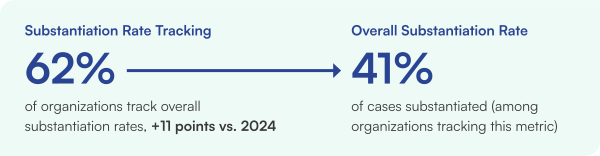
- Substantiation tracking by issue type is not common. Overall, substantiation tracking rose to 62% (up from 51% in 2024), but only one in three organizations track outcomes by issue type. This granularity is essential to surface patterns in discrimination, harassment and retaliation, and it provides defensibility when cases escalate to regulatory agencies.
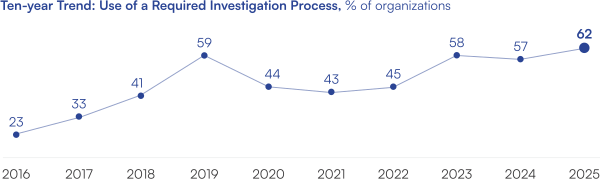
- Investigation processes are improving, but gaps still create significant exposure to risk. Use of a required investigation process hit an all-time high (62%), up 5 points from 2024, but 38% of organizations still have no required approach. Consistent investigation processes protect defensibility and help surface patterns before they escalate and signal to employees that concerns will be handled fairly.

AI is reshaping ER work, but human judgment remains irreplaceable.
Organizations are adopting AI to improve efficiency, consistency and rigor while preserving the expertise, empathy and accountability that defensible decisions require.
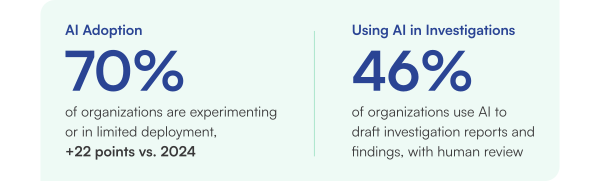
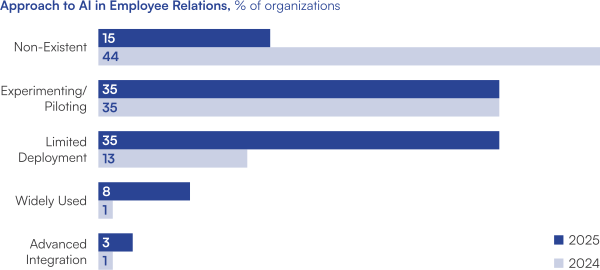
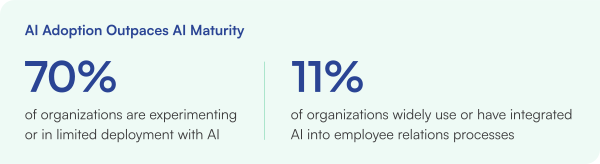
- Adoption is now mainstream. Nearly three of four organizations (70%) experimented with or deployed AI for employee relations work. This sharp shift from 2024 reflects growing pressure from rising volume and increasing complexity.
- Use cases are strengthening rigor. About one in five organizations (22%) reported using AI for quality assurance, data analysis and referencing applicable laws. This positions AI as a cognitive partner that helps teams strengthen findings and navigate compliance complexity.
- AI is driving real efficiency gains. Top uses included drafting investigation reports (46%) and summarizing interview transcripts (45%). Participants saw improved productivity, consistency and output quality, freeing time for the strategic work that defines effective ER.

Case Management & Organizational Resources
Strong foundations for employee relations have been established, but capacity remains a constraint.
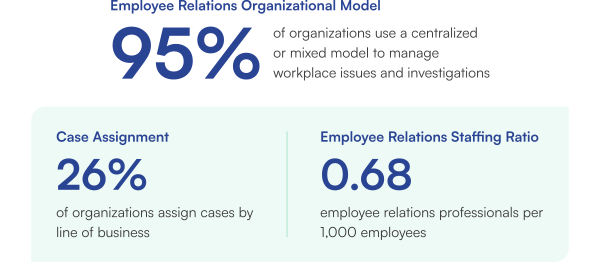
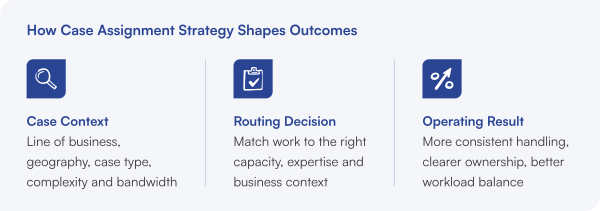
Centralization has been a defining feature of employee relations over the past decade and has become even more widespread as the function has matured. Case assignment strategies show that routing decisions now require more judgment, balancing business context, geography, case type, complexity and current workload. Yet resource allocation has not matured at the same pace, despite longer times to resolution for several high-scrutiny case types.
Notable Movement: Average days to close increased by 5-6 days for EEOC, federal, state or local agency-response cases
As case volume, serious allegations and issue complexity continue to rise, employee relations leaders need to evaluate how well their model, resourcing and routing discipline are aligned with the demands placed on the function. Connecting these components helps leaders support capacity recommendations and ensure teams can address complex issues consistently and effectively.

Organizational Models
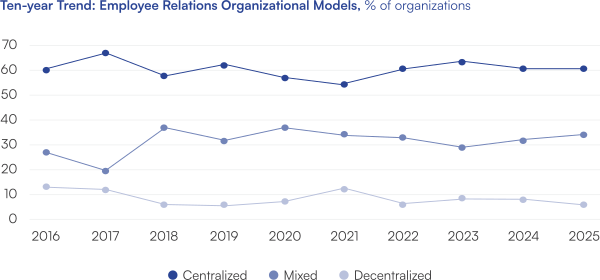
Centralized and mixed models remain the standard approach for organizations.
The ten-year trend shows a consistent move toward use of some sort of centralization for the employee relations function. The challenge is for organizations to determine how to create enough visibility, specialization and workload flexibility to support the work at scale.

We understood the importance of sophisticated employee relations support, but struggled to scale our expertise and enforce strong investigation documentation. Today, we’ve centralized all employee relations activity and personnel into one team and we’re finally capturing all HR investigations.
– Assistant Vice President, Global Employee Relations

Case Assignment
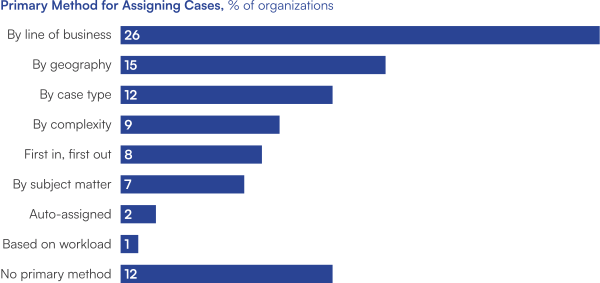
Case assignment is becoming a balancing act.
No single method of case assignment dominates. Teams balance business knowledge, neutrality, investigator expertise, case type, complexity and bandwidth as they route work to employee relations professionals. This is more pronounced in large organizations, where a larger portion of organizations assign cases using multiple factors.

Staffing Resources
Staffing hasn’t kept pace with employee relations workloads.
For the first time since 2022, the staffing norm was reassessed. Human resources generalist/business partner resources fell while employee relations staffing essentially remained unchanged. Differences by structure and organizational size provide practical benchmarks for leaders to assess resource needs. Larger organizations report fewer resources than smaller organizations, indicating economies of scale.
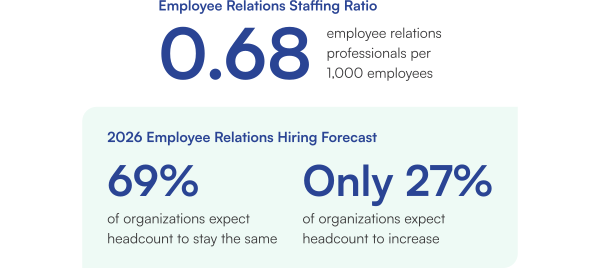
While our team size has grown modestly, its impact and workload have expanded significantly.
– Vice President, Employee Relations
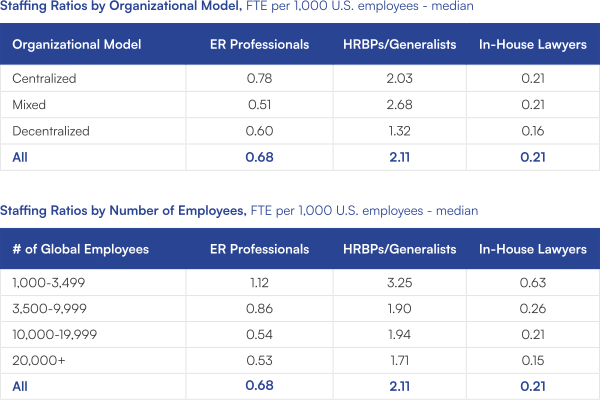

Time-to-Close
Long resolution times point to more demanding work.
Time-to-close is more than an efficiency measure. Outliers in either direction can signal unusual complexity or resolution timelines that warrant more in-depth case review. More granular time-to-close data can help leaders identify which cases require specialized expertise and support.
Notable Movement: Average days to close increased by 4 to 11 days across eight issue categories, signaling greater case complexity and stretched employee relations resources.
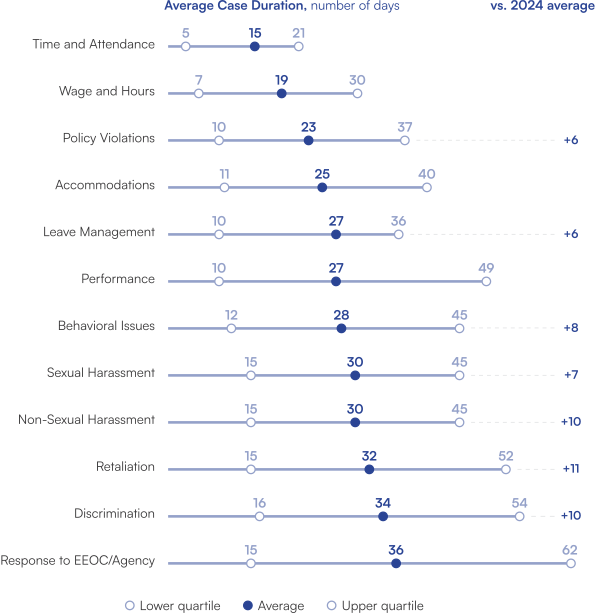

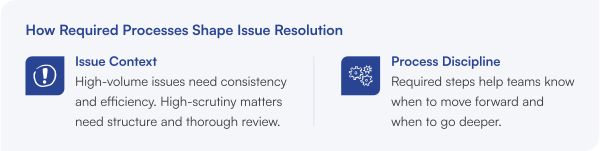
Required investigation processes support team efficiency and rigor.
Time-to-close varies by issue type and by the investigation process used. A required investigation process can help teams close some high-volume issue categories faster, while more complex or serious matters may take longer to ensure complete, impartial and compliant investigations.
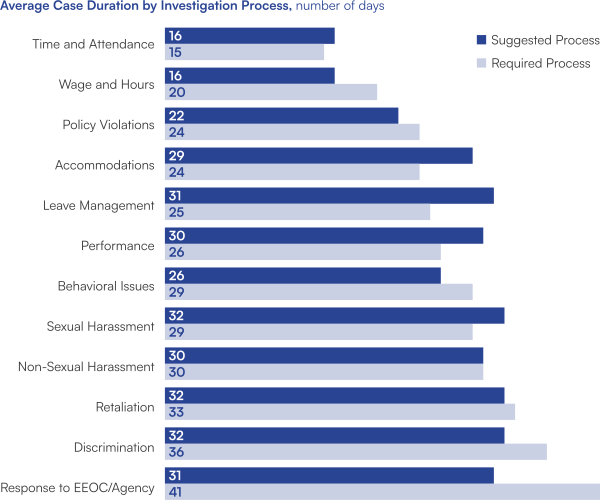
Processes, Practices & Technology
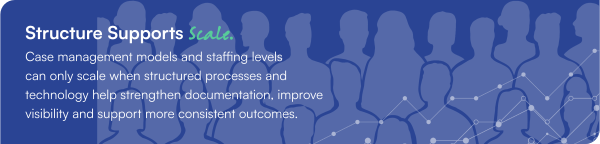
Broader adoption of required processes and technology is strengthening employee relations practices.
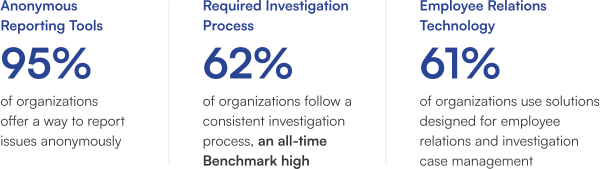
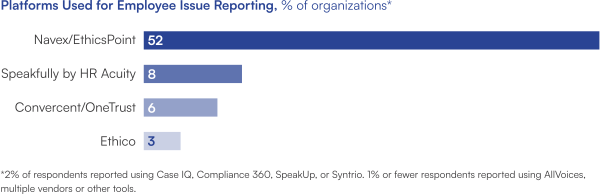
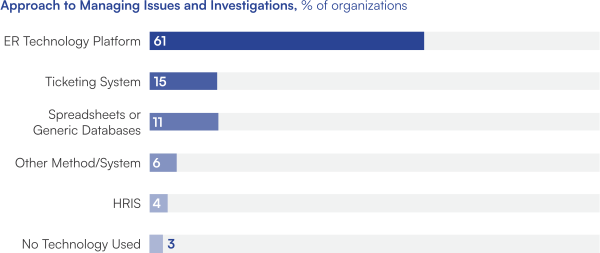
As employee relations work has become more complex, organizations are formalizing how concerns are reported, investigated, documented and managed. Nearly all organizations provide anonymous reporting tools, use of required investigation processes reached an all-time high in 2025 and purpose-built technology remains the standard approach to manage issues and investigations.
The value of structured processes and employee relations technology extends beyond documenting and tracking. When used consistently, they capture the detail employee relations teams need to identify patterns for targeted initiatives and connect case activity to broader business decisions.

Issue Reporting
Anonymous reporting tools are widespread, but visibility into reporting behavior is limited.
Nearly all organizations provide a tool for employees to report concerns anonymously. But deeper insight comes from understanding how employees use those channels.
Knowing the volume of anonymous versus named reports helps assess employee trust, psychological safety and confidence in the process. Unusual reporting patterns can signal the need to examine channel awareness, access or fear of retaliation.
Employee relations has given a voice to the voiceless in the company through anonymous reporting tools, building of trusted partnerships at all levels, centralization models and visibility across the organization.
– Employee Relations Leader

Investigation Processes
Investigation discipline is improving, but many organizations still lack a required process.
The trend is moving in the right direction as use of a required investigation process reached the highest level measured over the past decade. Even with this progress, the remaining gap creates an opportunity to strengthen how concerns are investigated, documented and resolved.
We have strengthened investigation processes, standardized performance management practices and implemented structured documentation tools to improve consistency and accountability.
– Coordinator, Employee Relations


Investigation Training
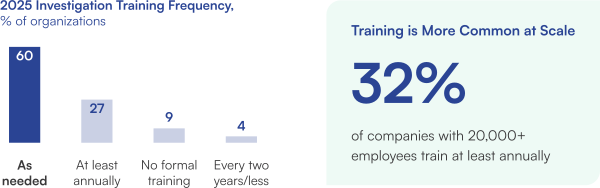
Formal investigation training has shifted from routine practice to as-needed support.
Since 2019, the share of organizations providing frequent or annual formal training on proper investigation techniques has declined sharply. As the workforce changes, employee issues become more complex and misconduct allegations rise, regular investigation training helps reinforce consistency and impartiality while strengthening the sound judgment needed to navigate nuanced workplace dynamics.

Pattern to Watch: Organizations with required investigation processes, employee relations platforms and anonymous reporting tools train more frequently, but as-needed training remains the majority practice.

Employee Relations Technology
Employee relations technology adoption continues to rise.
Use of employee relations technology has continued to increase, while spreadsheets and generic databases continue to decline as an approach to managing issues and investigations. The trend reflects a broader shift toward more structured case management for work that requires consistent documentation, confidentiality and reporting visibility.
Employee relations technology and anonymous reporting systems have enhanced our transparency and trend analysis.
– Coordinator, Employee Relations

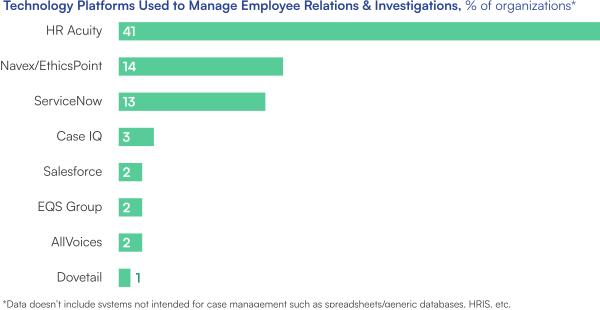
Purpose-built technology leads employee relations case management.
Employee relations work requires technology that can support the nuances of issue intake and case documentation, workplace investigations, reporting, analytics and aftercare. Solutions that are configurable to the organization’s needs can help teams manage issues more consistently, identify patterns earlier and connect case activity to risk, employee experience and business impact.

Technology Benefits & Challenges
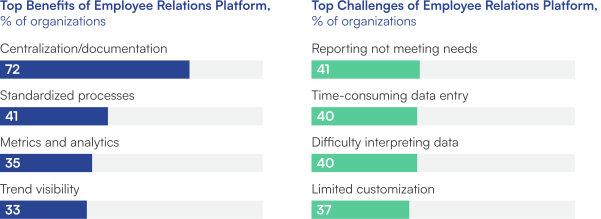
Technology value depends on usability.
Organizations find value in platforms that support the daily demands of managing employee relations cases through standardized, efficient processes. They are looking for solutions that provide easy access to data and insights that can drive initiatives and business decisions.
Analyzing individual employee relations cases by department, issue type and individual tags, alongside broader case trends, allows us to identify recurring issues early, address root causes and proactively mitigate organizational risk.
– Head of Global Employee Relations
Issue Trends & Volume
Demands on employee relations are growing as volume, misconduct allegations and case complexity rise.
Overall case volume returned to near-record levels in 2025, serious allegations continued to climb and growth across performance, behavioral and workplace conduct concerns shows how widely employee relations work is expanding. External influences such as political tension, societal events, generational dynamics and digital behavior are also increasingly part of the case mix.
Insights into case volume relative to issue volume reveals that cases are becoming more complex, often containing multiple issues. Understanding where volume is rising, what is driving the growth and how complexity shows up in cases gives leaders stronger evidence to guide resources, responses and prevention.
There are no more ‘simple’ employee relations issues. Most have some level of complexity and interwoven issues.
– Head of Employee Relations

Issue Volume
Discrimination, harassment and retaliation allegations reached an all-time high.
Issue volume rose across four of five major issue categories in 2025, continuing the broad upward trend seen in 2024. The findings suggest that employee relations teams are managing not only more issues, but more layered matters that may require greater investigation rigor, expertise and visibility to spot patterns.

Issue Volume by Organizational Size
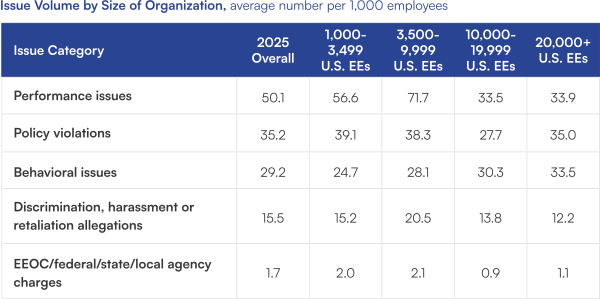
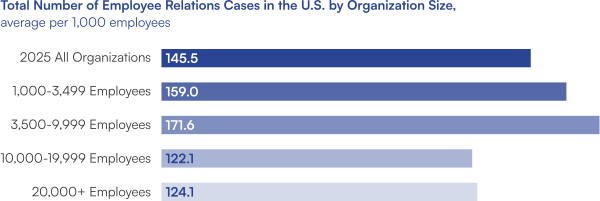
Issue volume varies meaningfully by organization size.
The highest overall issue volume was seen in mid-sized organizations including multiple higher-risk categories. This pattern highlights the value of comparing results against similarly situated organizations rather than relying on a single overall benchmark.

Issue Volume by Category
Issue volume is concentrated across core workplace categories.
Performance issues remained the highest-volume category, while behavioral issues increased notably, reinforcing the need to examine where manager support, prevention, documentation and investigation resources may be most needed. And while more serious, high-risk issues are less common overall, these investigations require more rigor and can be time-consuming.
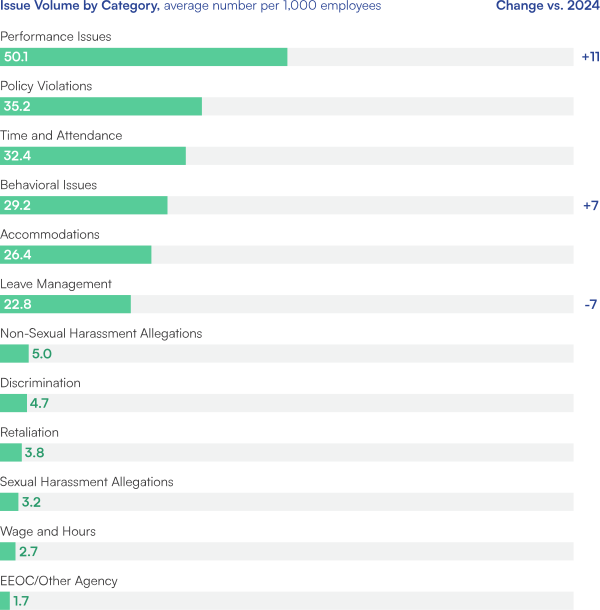
Pattern to Watch: Six categories carry much of the day-to-day work. Performance, policy, time and attendance and leave management account for the highest sustained volume. These patterns point to where manager support, training documentation and prevention may have the greatest impact.

Issue-to-Case Ratio & Case Complexity
Issue-level data reveals what case counts miss.
Issue-to-case ratio was added to the Benchmark Study in 2024 in response to employee relations leaders reporting greater case complexity. The metric provides a clearer view of true workload by showing the number of distinct issues within a single case. Tracking improved in 2025, but only one-third of organizations currently capture this data. Those that do reported an average of 1.3 issues per case.
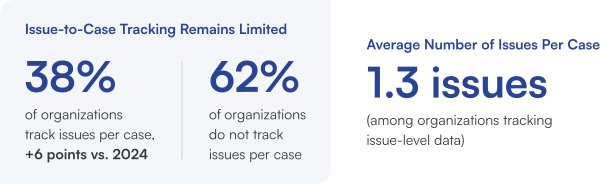
Directional Metric: Most organizations do not yet track issue-to-case ratio, so the data likely understates case complexity.
We have seen an increase in escalated issues year over year, as well as increased complexity of matters, often involving multiple issues and multiple parties.
– Global Head of Employee Relations

Issue Volume Trends
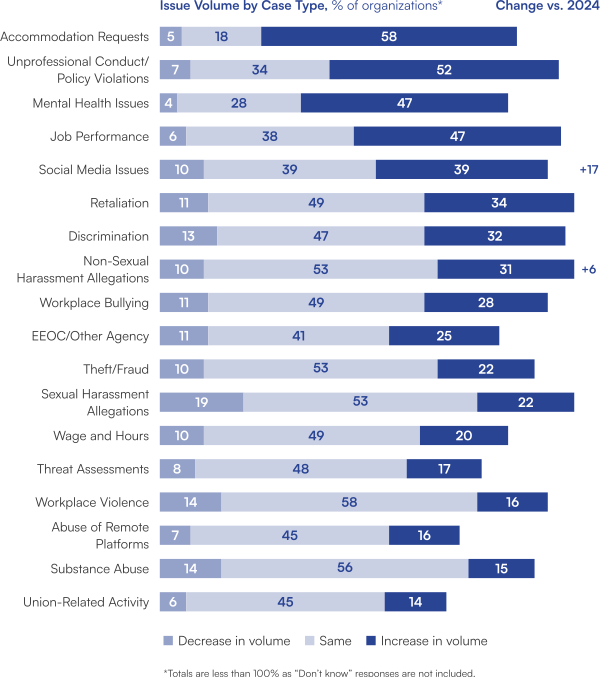
Issue volume is trending upwards.
More organizations reported increases than decreases across many issue areas in 2025. This view highlights where issue volume shifted most over the course of the year.

Issue Volume Attribution
Broader workplace pressures are driving issue volume.
Organizations attributed increased issue volume to external forces and workforce dynamics. Societal crises and broader use of technology were most often cited as volume drivers. Generational differences and the political environment also became more visible drivers in 2025.
We have also seen an increase in mental health issues and greater impact from the political environment and social media.
– Global Head of Employee Relations
Metrics & Analytics
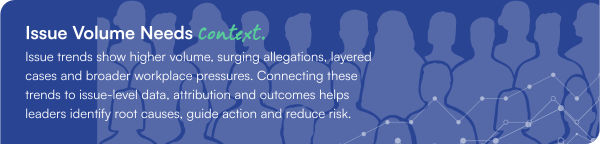
More meaningful data is needed to increase employee relations’ influence on the business.
Employee relations leaders are under growing pressure to showcase the work their teams manage and what the work reveals about the organization.
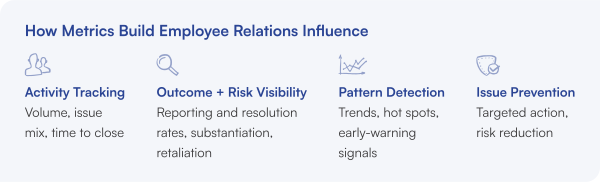
Meaningful metrics help teams evaluate operational efficiency, assess employee trust and experience and measure compliance and risk signals that can shape business decisions.
As allegations, case volume and complexity continue to rise, organizations need data that goes beyond activity tracking to show where problems are emerging, where processes are working and where targeted action can have the greatest impact.

Metrics Reporting
Metrics are widely used, but strategic application lags.
Most organizations use employee relations metrics to develop data-driven insights and identify training needs. Broader strategic applications remain less common, underscoring the need to use metrics more intentionally to guide decisions about people, process and risk.
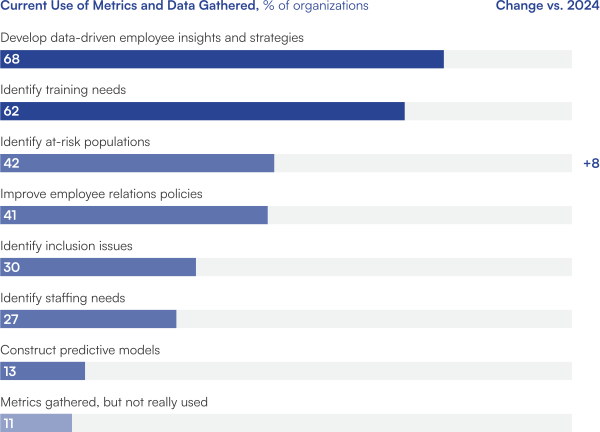
Notable Movement: Use of metrics to identify at-risk populations increased in 2025, signaling greater attention to changing workforce, compliance and risk expectations.

Integration with Advanced Analytics
Blending workforce data strengthens employee relations insights.
Many organizations are pairing investigation data with broader workforce data to better understand patterns across demographics, performance ratings, turnover and engagement scores. Viewed together, these data points help leaders see whether issues are isolated or part of broader patterns affecting trust, culture and business outcomes.
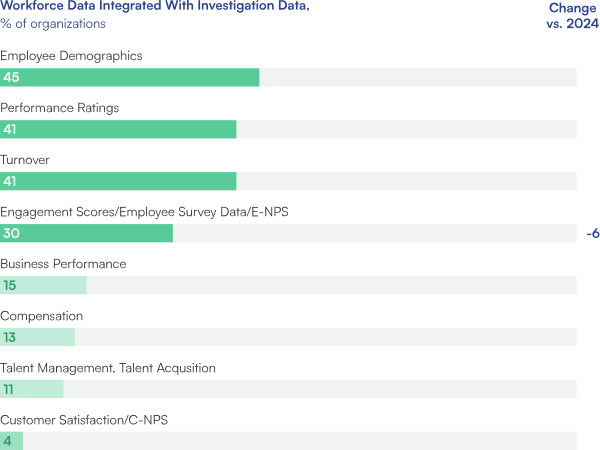
Data Connection: Combining investigation data with workforce context helps leaders see patterns that case data alone may not reveal.
We look at location, leader, department and other data points to understand whether issues are isolated or part of a broader pattern.

Trends in Advanced Analytics
Connected data turns insight into action.
Use of advanced workforce data sources has largely remained steady over time, underscoring the opportunity to turn integrated data into more targeted action, stronger engagement and healthier workplace culture.
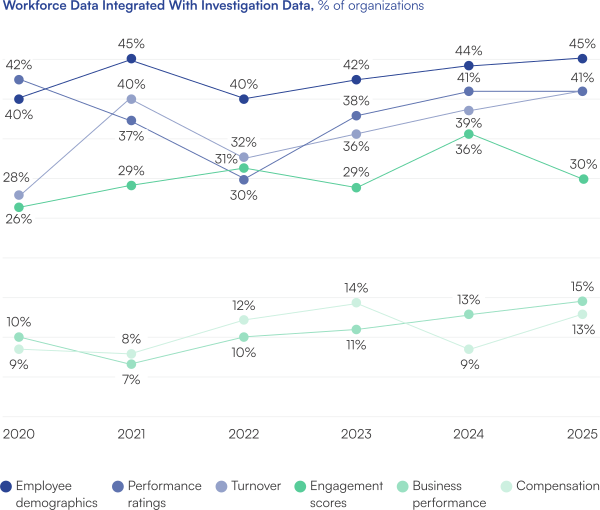
Pattern to Watch: Maintaining integration practices may not be enough as issue volume and complexity continue rising.
Substantiation Rates
Substantiation tracking is improving, but issue-level visibility remains limited.
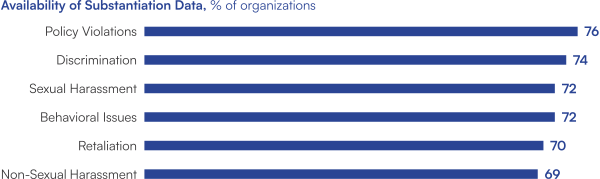
More organizations tracked overall substantiation rates in 2025, yet the percentage of issues substantiated remained flat year over year. Tracking case disposition by issue type also remained flat, with only one in three organizations measuring rates by issue category. Among those that do, access to category-level data improved across all issue categories.


Substantiation by Issue Type
Issue-level substantiation data helps clarify risk.
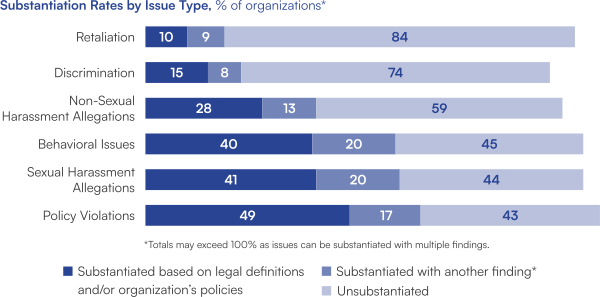
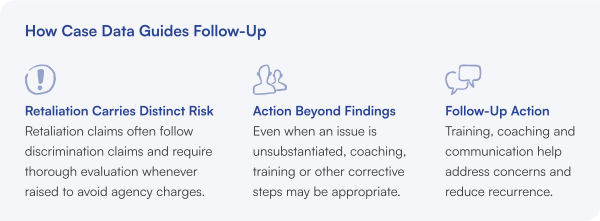
Case disposition rates by issue type continue to show a large share of unsubstantiated outcomes across categories. Even when an issue is not substantiated, investigations may still identify concerns that warrant recommended follow-up actions such as training, coaching, communication or other steps to prevent recurrence.

Predictive Analytics
Early signals help teams act before issues escalate.
More organizations are using data to identify early-warning signs and proactively manage issue spikes and trends to protect workplace culture and course correct before issues escalate into legal risk.
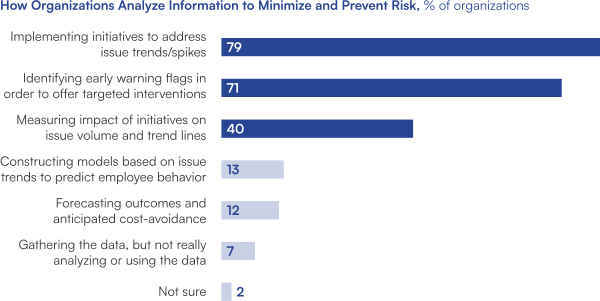

Employee relations has transformed from reactive and case-driven to a more strategic, data-informed and proactive discipline connecting behaviors, locations, leadership practices and policy themes to anticipate issues and enable earlier intervention, more targeted leader coaching and preventative actions.
– Employee Relations & Compliance Manager
AI in Employee Relations
AI adoption is accelerating across employee relations.
AI moved quickly into employee relations workflows in 2025, with most organizations experimenting with, piloting or using it for specific employee relations and investigation tasks. The shift is significant but still early. The Benchmark does not yet show a relationship between AI adoption and operational outcomes such as time-to-close. As employee relations teams evaluate where AI can support the work, its value will depend on disciplined use, clear governance, reliable data and the continued role of human judgment.
We’re using AI to analyze data sets for trends buried in the narratives, not just the standard fields or issue categories.
– Assistant Vice President, Global Employee Relations

The Impact of AI on Workflows & Efficiency
AI is reducing administrative burden and improving employee relations workflows.
Respondents often described AI as a practical tool for routine work such as summaries, note editing and drafting communications that reduce time spent on manual case documentation. The strongest examples show AI improving efficiency and access to information while organizations continue to limit use cases and maintain human review.
“AI helps draft clearer communications and research complex compliance issues instantly.”
– Head of Global Employee Relations
We are still in the early stages of adoption and optimization and are intentionally limiting use cases and maintaining human review to ensure accuracy, confidentiality, fairness and compliance with internal IT protocols.
– Associate Relations
AI has shifted investigators from manual processing to higher-value analysis and decision support.
– Global Employee Relations Leader
The Impact of AI on Work Quality & Analysis
AI is helping employee relations teams produce stronger insights.
Some respondents said AI is helping their teams strengthen analysis, identify patterns earlier and translate complex data into more actionable insights. These examples show its potential to help employee relations teams see themes more clearly and act sooner.
AI has enhanced our ability to recognize early indicators of emerging concerns, enabling proactive intervention rather than reactive response.
– Employee Relations & Compliance Manager
AI-Assisted Issue Reporting
AI is changing how employees raise concerns. Employee use of AI is adding detail, volume and legal framing to complaints, increasing the investigative effort required to resolve issues defensibly.
AI is being used by employees as well. As a result, we are seeing longer and more detailed complaints.
– Senior Director, Global Employee Relations
AI has allowed complaints to proliferate in a way we have not seen before.
Employees often create massive packets of evidence via AI generation.
Adoption & Current Uses
AI use is concentrated in documentation and review tasks.
Employee relations and investigation teams most often use AI to draft investigation reports and summarize interview transcripts. These use cases can reduce administrative burden but also require careful human review, as AI-generated summaries can miss case evidence, credibility considerations, policy context and judgment that shape defensible investigations.
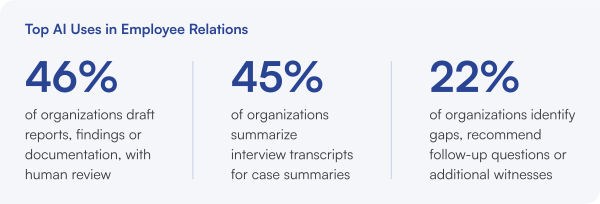
Pattern to Watch: Specialized AI uses are beginning to emerge. Beyond documentation and summaries, 21% or fewer use AI for trend analysis, transcription, translation, legal reference, case search, policy recommendations, automated coaching for managers or workflow support.
We only use AI to summarize interview notes, but that alone has saved a lot of time.
– Employee Relations Director

AI Permissions & Governance
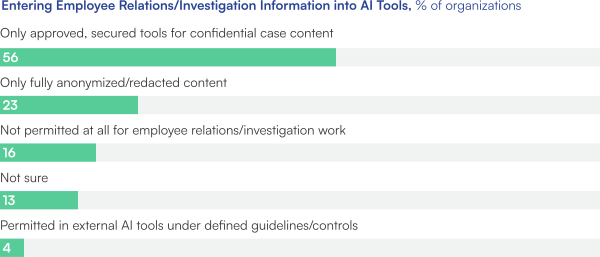
Confidential case data requires strong AI guardrails.
Most organizations limit employee relations or investigation information to approved internal tools or fully anonymized content. These boundaries reflect the sensitivity of case information and the need to protect confidentiality, fairness and compliance. Without clear guardrails, AI can introduce new risks into work that require discretion, neutrality and careful documentation, especially when AI-generated content becomes part of the case record.
We are developing use case scenarios with built-in guardrails to ensure the team understands the appropriate ways to use AI and other in-house tools.
– Employee Relations Senior Manager
ER/Q Maturity Model
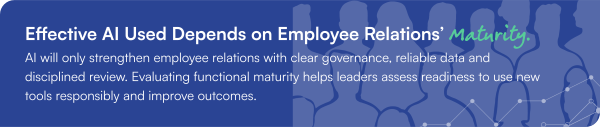
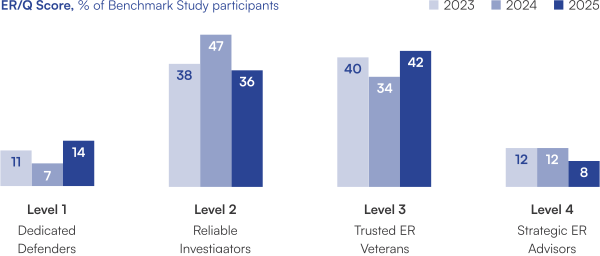
Most organizations remain in the middle stages of employee relations maturity.
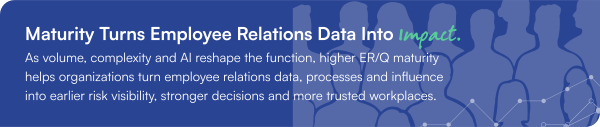
The ER/Q model helps organizations assess the current maturity of their employee relations function across its purpose, processes and organizational influence and provide insights to enhance impact. ER/Q scores for organizations that participated in the Benchmark Study show a consistent pattern year over year, with most organizations concentrated at Level 2 or Level 3.
What is ER/Q?
What is ER/Q? The employee relations maturity model provides a baseline and serves as a guide to help organizations up level their employee relations. The model offers simple, practical, actionable steps to improve employee experience, build transparency across the organization and further elevate the function.
To learn more about ER/Q or take the assessment, visit www.hracuity.com/erq.

Correlation of ER/Q to Practices & Processes
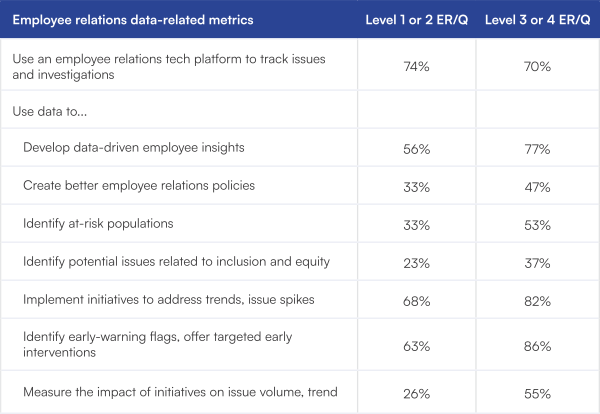
Higher ER/Q correlates with more strategic use of employee relations data and analytics.
Organizations with a Level 3-4 ER/Q are more likely to use employee relations data across a broader set of actions and initiatives, including policy creation, identifying predictors of ER issues and developing initiatives to minimize risk and prevent future issues.
Methodology & Terminology
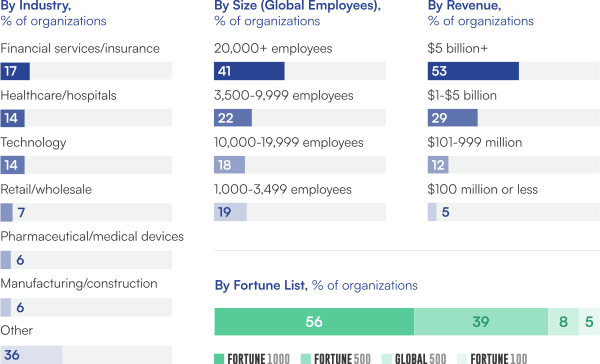
HR Acuity, in partnership with Isurus Market Research, surveyed employee relations professionals at enterprise organizations with at least 1,000 U.S. employees. The study includes 274 organizations representing 8.8 million employees globally, covering calendar year 2025 practices. Research was conducted January 23-March 24, 2026. Margin of error: ±5.9 percentage points (95% confidence interval). Only statistically significant year-over-year differences are noted.
The Benchmark Study combines broad outreach to employee relations leaders, structured data collection from internal systems and rigorous quality control. Participating organizations are anonymized in published results. Ten consecutive years of data provide a market-wide view of how employee relations practices evolve, distinguishing short-term movement from lasting industry shifts.
Terms Used in the Employee Relations Benchmark Study
Employee Relations Professionals: Individuals who are dedicated to managing or working on employee relations matters
HR Business Partners/Generalists: Provides strategic/operational human resources support to business or functional areas
Employee Relations Quotient: A maturity model for employee relations designed to help organizations measure and improve employee relations processes
Employee Relations Organizational Models
Centralized: Centralized team of Employee Relations Professionals or Center of Excellence (“COE”) responsible for managing employee relations issues and conducting investigations across the organization (Note: This group does not have to be geographically centralized)
Mixed: Centralized team for managing some or most of the employee relations cases and investigations but field resources (HRBPs/Generalists and/or managers) still manage some ER issues
Decentralized: Employee relations issues are managed within the specific lines of business by HR Business Partners/Generalists or Employee Relations Professionals; Employee Relations matters are not centralized
Acronyms Used in the Employee Relations Benchmark Study
CHRO
Chief Human Resources Officer
COE
Center of Excellence
EEOC
Equal Employment Opportunity Commission
ER
Employee Relations
ERP
Employee Relations Professional
ER/Q
Employee Relations Quotient
FTE
Full-Time Equivalents
HR
Human Resources
HRBP/G
Human Resource Business Partner/Generalist
HRIS
Human Resource Information System
Respondent Profile
The Study captures a broad view of enterprise employee relations.
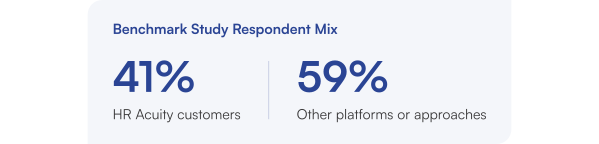
Findings reflect input from 274 organizations representing 8.8 million employees globally, including 195 Fortune 500 companies. Respondents span a wide range of industries, company sizes, revenue bands and positions. These include CHROs, global leads, heads of HR, vice presidents, directors, senior managers and HRBPs, with 70% of respondents in leadership roles.
The Benchmark Study shows what’s possible.
HR Acuity helps you get there.
See why we’re rated the #1 Enterprise HR Case Management Software. Book a demo today.
Join the empowER Community
Your role in molding exceptional employee experience and safeguarding your organization has never been more critical. Imagine joining forces with 8,000+ passionate ER leaders and practitioners to amplify your impact. That powerful network is within your reach, and free to join.
Explore Past Employee Relations Benchmark Studies
Revisit a decade of insight. Each past Employee Relations Benchmark Study offers the most comprehensive look at the trends defining employee relations in its year — and together they tell the story of how the entire field has evolved.
-
Explore Now
The Ninth Annual Employee Relations Benchmark Study
The Ninth Annual Employee Relations Benchmark Study revealed trends in tracking metrics, investigations and strategies to foster trust and transparency.
-
Explore Now
The Eighth Annual Employee Relations Benchmark Study
Our Eighth Benchmark Study revealed a sharp rise in mental health challenges driving record workplace issues, increased data use to improve employee insights and low AI adoption in employee relations.
-
Explore Now
The Seventh Annual Employee Relations Benchmark Study
Our Seventh Benchmark Report highlighted strategies to navigate the surge in mental health issues post-pandemic and strengthen confidence in the employee relations function.
-
Explore Now
The Sixth Annual Employee Relations Benchmark Study
Our Sixth Benchmark Report demonstrated that urgency to strengthen trust, transparency and foundational ER practices has never been greater to meet rising employee expectations and drive meaningful change.
-
Explore Now
The Fifth Annual Employee Relations Benchmark Study
Our Fifth Benchmark Report highlighted the evolution of employee relations over the decade and called attention to setbacks in investigations, transparency and resources that required urgent focus.
-
Explore Now
The Fourth Annual Employee Relations Benchmark Study
Our Fourth Benchmark Report celebrated employee relations’ growing role and data-driven focus during unprecedented times, highlighting industry best practices and rising transparency.
-
Explore Now
The Third Annual Employee Relations Benchmark Study
Our Third Benchmark Report marked employee relations’ rise as a strategic business partner, highlighting its growing influence in shaping safer, more productive workplaces.
-
Explore Now
The Second Annual Employee Relations Benchmark Study
Our Second Benchmark Study launched amid the #MeToo movement, establishing crucial standards for managing workplace misconduct and empowering ER leaders with data-driven insights from over 100 organizations worldwide.
-
Explore Now
The First Annual Employee Relations Benchmark Study
In the First Benchmark Study, discover how organizations like yours tackle employee relations challenges using proven processes, management models, technology and strategies to strengthen ER outcomes.