
Employee relationship management is a critical part of any organization. Failing to manage employee relationships effectively can lead to lower productivity, higher turnover and decreased engagement — all of which are imperative to avoid.
By applying employee relationship management best practices, HR teams can drive stronger performance, improve retention and create a more positive workplace. In this guide, we explore the core elements of a successful employee relationship management strategy and how to measure its effectiveness. Let’s dive in.
Key Takeaways: Best Practices in Employee Relationship Management
- Foster fairness and engagement: Apply employee relationship management best practices like enhancing communication, recognizing contributions and creating a safe, supportive workplace.
- Address issues proactively: Resolve conflicts, track incidents and implement feedback consistently to maintain trust and transparency.
- Measure and optimize: Monitor key metrics, document cases and use the right tools to ensure your employee relationship management strategy drives productivity, retention and a positive culture.
What is Employee Relationship Management?
Employee relationship management (ERM) is carried out by HR professionals who have specialized experience in employee relations itself. The ultimate goal of an employee relations manager is to foster harmonious relationships throughout all levels of an organization, from the most junior position to the executive committee.
Why Employee Relationship Management Matters
Effective employee relationship management is crucial for maintaining an organization’s productivity, as it fosters trust and respect among employees.
A focus on organizational transparency in terms of how internal policies are followed is a central component of fostering employees’ confidence in eachother and the organization. When employee relationships are managed effectively, businesses experience increased employee retention rates, which is crucial for an organization to operate optimally. In a world where employee expectations and demands are changing rapidly, organizations must stay ahead of the curve in employee relationship management to remain competitive within their respective industries.
Benefits of Employee Relationship Management
A strong Employee Relationship Management (ERM) strategy offers numerous advantages, empowering organizations to create a more engaged and effective workforce. The benefits of employee relationship management extend across productivity, culture and employee growth. Here’s what you need to know:
- Enhanced collaboration: By improving communication channels and fostering teamwork, ERM breaks down silos and strengthens cross-department relationships.
- Reduced turnover: Organizations that actively manage employee relationships can address concerns early, resulting in higher retention and a more stable workforce.
- Stronger organizational culture: ERM reinforces shared values and positive behaviors, creating a workplace where employees feel aligned with the company’s mission.
- Leadership development and morale: ERM encourages employees to take on leadership opportunities and recognizes their contributions, boosting confidence and overall morale.
- Increased productivity: Clear expectations, streamlined communication and a supportive environment empower employees to focus on meaningful work. (Not to mention this drives better results for the business. It’s a win-win.)
Key Components of Employee Relationship Management
So, what does employee relationship management look like in practice? We’re glad you asked. Let’s walk through some key components:
Policy Design and Implementation
Employee relations managers are responsible for creating, executing and monitoring programs relating to subjects like salaries or wages, benefits, working hours, occupational health and safety and fair hiring practices.
Workplace Conflict Management
A key element of employee relationship management is arbitration and mediation to resolve disputes between employees. The importance of addressing grievances related to interpersonal relationships at the workplace can’t be overstated.
Conducting Incident Investigations
Unfortunately, workplace issues do arise, and when they do, it’s crucial that they are handled correctly. Employee relations managers are responsible for investigating cases where an employee’s rights may have been violated. They also initiate inquiries when employees breach organizational rules or internal policies.
Liaising Between Employees and Management
Employee relations managers serve as intermediaries between employees and management, particularly when communication breaks down between staff and leadership.
Best Practices For a Successful Employee Relationship Management Strategy
To be effective, an employee relationship management strategy must account for a variety of factors. Success depends on how well you create, implement and track your strategy.
What to Avoid: Employee Relationship Management
- Displaying favoritism: Whether intentional or unconscious, favoring some employees over others creates tension and workplace conflict, ultimately undermining your employee relationship strategy. A strong employee relationship management strategy should clearly define how all employees are treated fairly and consistently. But that’s not enough — your team also has to “walk the walk” and demonstrate consistency and fairness in practice.
- Micromanaging employees: Excessive oversight is a top workplace frustration. Micromanaging signals a lack of trust and can stifle performance. Effective employee relationship management includes clear management processes and ongoing coaching to help managers lead confidently and in line with organizational expectations. (Your team can also implement a people leader solution to ensure your managers are handling issues the right way.)
- Ignoring feedback: Collecting employee feedback is pointless if it isn’t acted upon. Ignoring input sends the message that employee voices don’t matter. A comprehensive strategy should include a clear process for implementing feedback to strengthen engagement and trust.
- Avoiding issues: Workplace problems — from conflicts to safety concerns — simply cannot be ignored. Proactively addressing issues is central to effective employee relationship management. Your strategy should outline how issues are identified, escalated and resolved to maintain a fair and safe workplace.
What to Do: Employee Relationship Management
- Enhance communication: Communication is the backbone of any successful workplace. Your employee relationship management strategy should clearly explain how the employee relations team operates, creating clarity, transparency and predictability. This helps prevent misunderstandings that could harm employee relations.
- Increase transparency: Transparency is essential to effective employee relations management. Your strategy should outline how key organizational information is shared with employees. When staff are left in the dark, issues and frustration are truly inevitable.
- Recognize and reward: Employees need to know they are valued. It sounds simple, but it’s essential. Employee relations management strategies should ensure that recognition programs and total rewards policies are applied consistently and fairly to reinforce engagement and motivation.
- Create a safe space: A supportive workplace starts with psychological safety. And if you don’t have that, nothing else will work. Your strategy should define how employees are encouraged to speak up and how concerns about feeling uncomfortable, unsafe or unsupported are addressed. Proactive steps here are central to the benefits of employee relationship management.
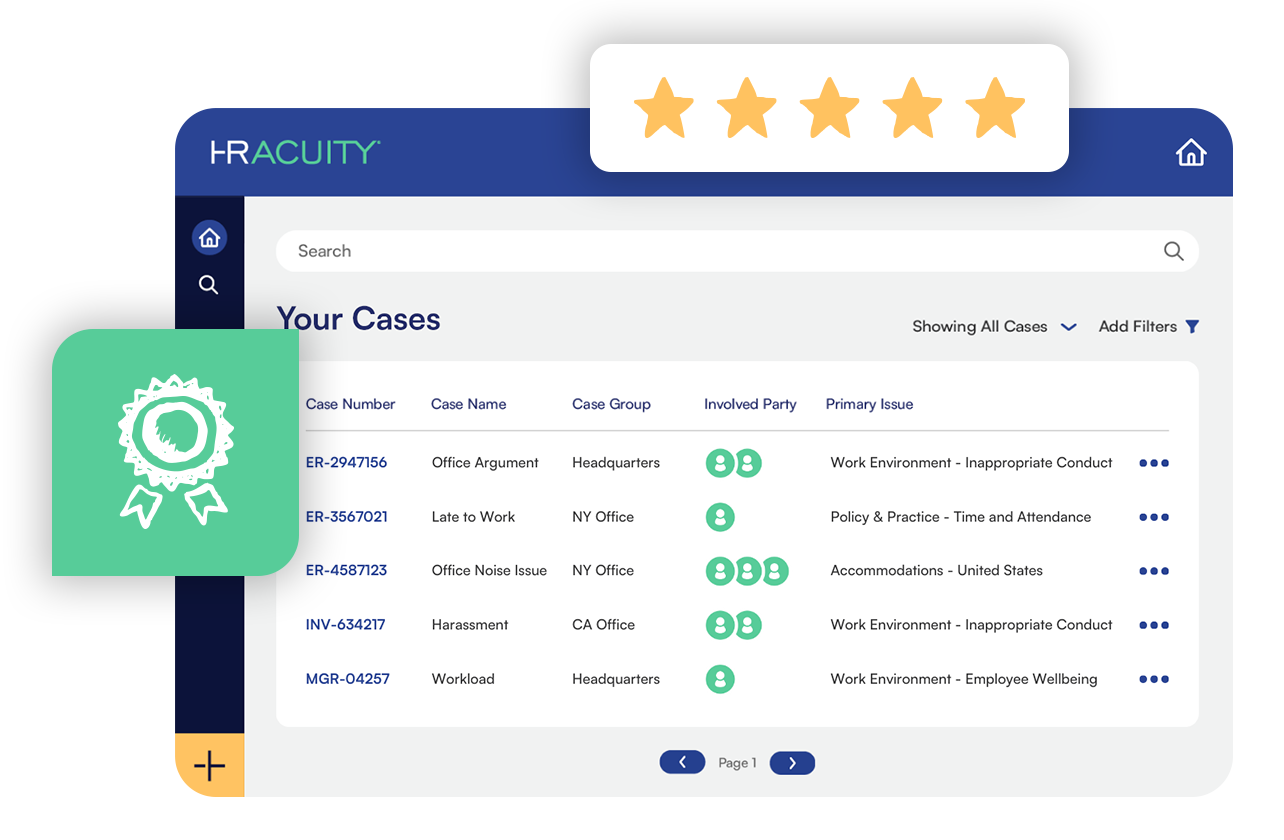
- Keep comprehensive records: Even the best strategies cannot prevent every issue. Your employee relationship management plan should explain how incidents are documented, investigated and resolved. Tools like HR Acuity’s documentation software help centralize notes, making recordkeeping accurate and accessible.
- Provide employees with the right resources: Employees need the tools and support to succeed. Your strategy should cover policies for technology use and other essential resources to ensure everyone can work efficiently and equitably.
- Invest in your staff: Career growth matters to your employees. Offering opportunities to build skills and advance professionally demonstrates investment in your team and fosters loyalty, engagement and long-term retention.
- Give employees individual attention: Managers should check in with each team member regularly. Understanding what employees enjoy, struggle with and need from their working relationships allows engagement strategies to be tailored. Employees who feel seen, heard and supported are more likely to feel part of a team that values them.
Using employee relationship management best practices as a guide can help your organization achieve a strong return on investment and stay competitive in its industry. Whether your strategy requires a few adjustments or a complete overhaul, updating it thoughtfully will ensure ongoing success.
Metrics to Monitor for Employee Relationship Management Success
To measure the effectiveness of your employee relationship management strategy, ER professionals should track the following metrics:
- Case volume and type: Monitoring the number and categories of employee relations cases helps identify trends and areas of risk. Understanding these patterns allows organizations to proactively address issues before they escalate.
- Resolution time: Tracking how long it takes to resolve cases ensures that issues are addressed promptly. Shorter resolution times often indicate efficient processes and a responsive ER team, which enhances trust in employee relations management.
- Employee feedback and engagement: Measuring satisfaction, feedback scores and engagement levels helps evaluate whether employees feel heard and supported. This metric provides insight into the overall effectiveness and perceived fairness of your employee relationship management practices.
- Recurrence of issues: Tracking repeat incidents or complaints highlights systemic problems that need strategic intervention. Reducing recurrence is a clear indicator that your employee relations management strategy is working.
For a deeper dive into HR and ER metrics, check out Employee Relations Metrics and KPIs and HR Data Analytics.
Employee Relationship Management Tools and Systems
For your employee relationship management strategy to be truly comprehensive, your organization’s human resources department needs systems to administer and monitor it. It’s impossible to overstate the value of these systems. Gone are the days of pen and paper lists, feedback surveys and performance evaluations — managing employee relationships has gone digital. (And thank goodness for that!)
With advanced employee monitoring software, organizations can track the success of their employee relations programs and policies more quickly and accurately than ever before.
There’s an employee monitoring program for every aspect of employee relationship management. Their applications range from time tracking and attendance management to sensitive information protection and coaching. As part of making your employee relationship management strategy exceptionally thorough, you need to determine what software you’ll require to monitor and enhance your employees’ day-to-day output and productivity.
HR Acuity Supports Effective Employee Relationship Management
Strong employee relationship management is essential for creating a fair, transparent and supportive workplace.
The great news? You don’t have to make it happen alone. HR Acuity helps organizations bring this to life with cloud-based tools that simplify case management, documentation, anonymous reporting and strategy optimization. Our all-in-one platform makes it easier to follow best practices, ensure consistency and keep employees engaged and heard.
Ready to see how HR Acuity can empower your team to strengthen and standardize its employee relationship management process? Get a demo today.