
Your employee relations team is responsible for turning the expectations between employer and employee into real, consistent practice that protects both sides. And yes, that’s a huge responsibility.
When conflict escalates, performance slips or misconduct surfaces, employee relations teams step in to protect employees and the organization. Because of this, it’s a mission-critical function.
Today, we’ll walk you through real-world employee relations examples, how ER professionals should handle such scenarios and the programs that prevent issues from turning into headlines.
Key Takeaways: Employee Relations Examples
- Employee relations is mission-critical work that turns expectations between employers and employees into consistent practice — from conflict management and performance issues to misconduct, policy clarity and disciplinary action.
- Strong ER programs and tools (onboarding, training, surveys, EAPs, recognition, communication channels and anonymous reporting) help prevent issues, surface risks early and give people leaders the support they need.
- HR Acuity gives ER teams a single, trusted system to document issues, investigate fairly, spot trends and confidently manage examples of employee relations issues and solutions across the organization.

Common Examples of Employee Relations Responsibilities
Every organization has employee relations responsibilities, whether there is a formal ER team or not. Someone is investigating complaints, documenting issues, interpreting policy and deciding what happens when an issue is substantiated. Those are employee relations decisions.
Below are common examples of employee relations work, how ER gets involved, the actions to be taken and the outcomes they drive. If you want to dig deeper into
1. Conflict Management and Resolution
Conflict is one of the most visible ways ER shows up. Left unaddressed, a conflict can drag down performance, damage morale and create legal risk if it crosses into harassment or discrimination. That’s why conflict management is so imperative.
Examples of Situations That May Require Employee Relations Support
- Two employees are engaged in a long-standing dispute over who owns a particular process. Work slows and their manager is stuck in the middle.
- A team reports that their manager plays favorites with assignments and promotions
- A remote team struggles with tone in email and chat, especially across generations, which can lead to misunderstandings and personal friction
When ER Gets Involved
ER usually steps in when:
- The conflict has been ongoing, and a manager cannot resolve it
- A formal complaint is submitted through HR, ER or an anonymous channel
- The situation may involve a policy violation or a member of a protected class
If there are allegations of bullying, policy violations, discrimination or harassment, ER initiates a structured investigation process. However, not every employee relations issue requires a formal investigation — some are resolved without one.
Example Outcomes
- A mediated conversation with clear expectations and next steps
- A formal investigation with documented findings if policy violations are alleged
- Adjusted responsibilities or reporting lines when structure is driving conflict
- Policy violations can result in discipline or employee separation
Prevention Tips
- Train managers on early conflict identification, and offer a people leader support tool with triage support, easy access to policies and seamless documentation
- Ensure your HR case management and investigations solution supports effective documentation, consistent issue handling and delivers data insights so you can spot hotspots and address them before they escalate.
- Build regular check-ins where employees can raise concerns before they file formal complaints
2. Performance Management
Performance issues touch nearly every organization, but they become employee relations issues when patterns persist, documentation is missing or decisions may introduce risk. ER helps ensure performance conversations are fair, consistent and aligned with policy.
Examples of Situations That May Require Employee Relations Support
- A high-performing employee suddenly experiences a sustained drop in output. Deadlines slip, peers pick up the work and the manager is unsure how to address the change.
- A manager wants to terminate an employee for poor performance but has provided only informal feedback and has no documentation to support the decision — which introduces the organization to risk.
- An employee claims their performance rating is retaliatory after raising a concern about their supervisor.
When Employee Relations Gets Involved
ER steps in when:
- A performance issue continues despite the manager’s coaching
- A manager is unsure how to document expectations or deliver difficult feedback (Psst: A manager support tool can help with this.)
- Performance decisions may intersect with medical leave, accommodation requests or protected activity
- A potential termination is being considered without a clear documentation trail
ER reviews the history, evaluates risk factors and moves forward with the appropriate next steps.
Example Outcomes
- Clear written expectations with measurable goals and follow-up checkpoints
- A formal Performance Improvement Plan that outlines expectations, timelines and support resources
- A reassignment when the issue is rooted in role misalignment rather than effort or skill
- Termination when expectations were clearly outlined, documentation is complete and improvement did not occur
Prevention Tips
- Give managers access to people leader tools that empower them to handle performance issues seamlessly
- Make sure your people leaders have the ability to easily raise concerns to ER, ideally directly through the manager platform
- Leverage standardized documentation, best-practice embedded workflows and templates that make it easy to track goals, expectations and progress
- Implement a single source of truth in HR case management so employee history is easy to find and accessible.
Ensure your ER technology supports PIP documentation, timely case tracking and visibility into managers who may need additional coaching.

3. Policy Development and Compliance Monitoring
Policies only work when expectations are clear and leaders consistently apply them. ER identifies gaps, clarifies interpretation and drives alignment across teams.
Examples of Situations That May Require Employee Relations Support
- Employees are unclear on how the hybrid or remote work policy applies to their roles and as a result, aren’t working in-office as much as required
- A department manager is enforcing attendance rules differently than the rest of the organization
- New legal requirements make parts of an existing policy outdated
When ER Gets Involved
ER steps in when:
- Employees or managers repeatedly ask the same policy questions
- Teams apply the same policy differently
- New regulations create compliance gaps
- Investigations or issues reveal unclear or outdated policy language
ER reviews policy language, identifies friction points and partners with HR and legal to update and communicate expectations.
Example Outcomes
- Updated policies with clearer language and practical examples
- Manager guidance that demonstrates how to apply policies in real situations
- Organizational audits to confirm consistent application
- Training or communication campaigns that reinforce expectations
Prevention Tips
- Establish a regular policy review schedule — policies are living documents and should be treated as such
- Use centralized case management to track policy issues and identify hotspots
4. Employee Engagement & Workplace Wellbeing
Engagement and well-being problems show up in ER through absenteeism, burnout, leave requests, interpersonal conflict and more complex cases with multiple issues. ER helps diagnose and address root causes before they erode culture or performance.
Examples of Situations That May Require Employee Relations Support
- A team experiences burnout after a major business initiative and errors and complaints rise
- An employee feels overwhelmed by workload expectations and reports concerns about mental health
- ER and exit interview data from the same manager show similar issues with communication and recognition
When ER Gets Involved
ER engages when:
- Engagement or pulse survey results start to dip (This is why a successful HR case management platform is so imperative — without visibility into your data, you can’t make improvements)
- ER cases indicate increased stress or burnout
- Employees raise concerns about workload or team climate
ER reviews data, meets with employees and partners with HRBPs and leaders to identify underlying drivers.
Example Outcomes
- Workload redistribution to address pressure points
- Action plans tied to survey results with ownership and timelines
- Manager support on communication, recognition and prioritization
- Referrals to well-being or Employee Assistance Programs when needed
Prevention Tips
- Pair ER case trends with engagement data to identify early risks
- Encourage managers to hold regular check-ins focused on workload and well-being
- Ensure employees know how to raise concerns early, using multiple secure reporting channels
5. Misconduct Management
Misconduct is high-risk work that requires consistency, confidentiality and a defensible process. ER leads investigations and ensures fair, timely resolution.
Examples of Situations That Require Employee Relations Support
- An employee reports harassment by a colleague or supervisor
- Employees share inappropriate or offensive messages in a team chat
- An employee alleges retaliation after previously reporting misconduct
- There are concerns about theft, fraud or misuse of company resources
When ER Gets Involved
ER takes the lead when:
- Allegations involve harassment, discrimination or retaliation
- Complaints involve protected classes
- Safety or compliance is at risk
- Evidence needs to be reviewed through a structured investigation
ER triages the concern, determines the scope and launches a formal investigation.
Example Outcomes
- A structured investigation with documented findings
- Corrective actions ranging from coaching to termination
- Required training or policy updates when patterns appear
- Communication with relevant stakeholders while maintaining confidentiality
Prevention Tips
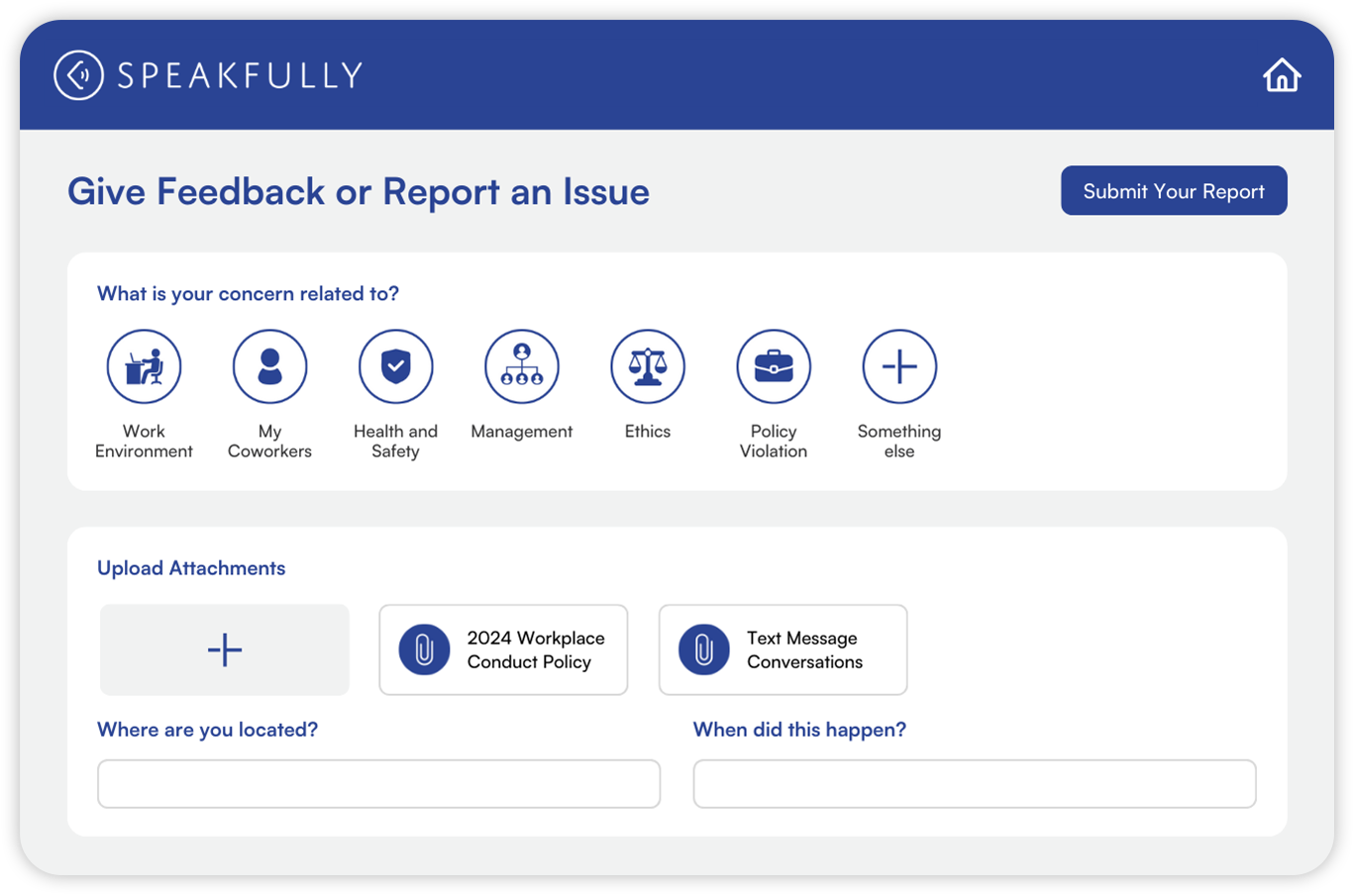
- Provide anonymous and named reporting channels and clear reporting expectations
- Train employees and managers on what misconduct looks like and how to report it
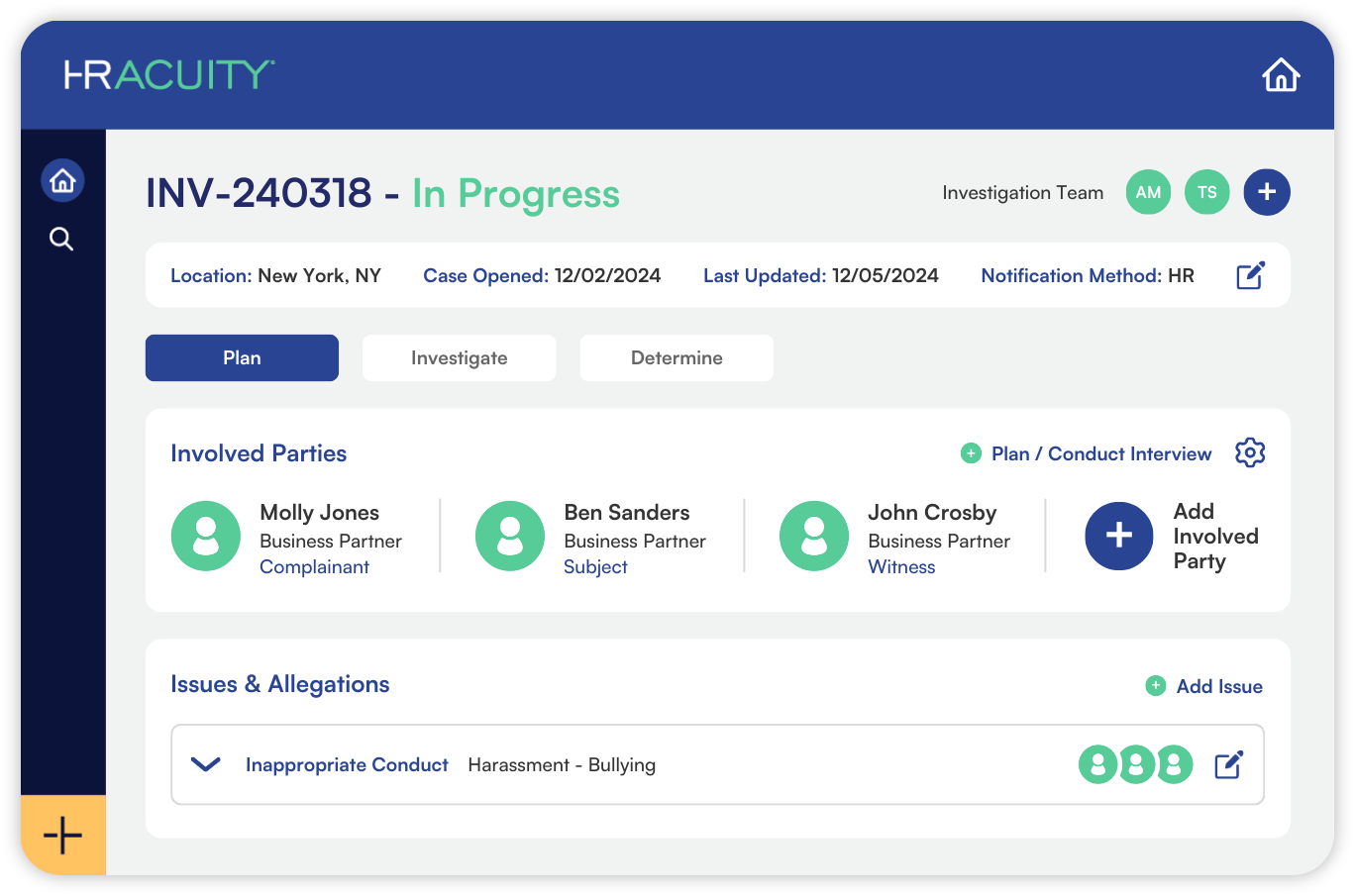
- Use consistent investigation workflows to ensure fairness and defensibility — your investigations tool should help you with this (HR Acuity does!)
6. Disciplinary Action
Disciplinary action supports accountability and consistency when expectations are not met. ER ensures decisions are aligned with policy, well-documented and free from bias.
Examples of Situations That Require Employee Relations Support
- Repeated attendance violations despite prior coaching
- Failure to follow safety procedures that results in a risk for others
- A manager seeks termination but lacks documentation or past corrective action
When ER Gets Involved
ER becomes involved when:
- A manager is considering discipline or termination
- A formal investigation has occurred
- Behavior issues are repeated or escalating
- Discipline appears inconsistent across teams
ER evaluates the situation, identifies gaps and guides next steps.
Example Outcomes
- Written warnings with clear expectations and next steps
- Final warnings when prior corrective actions have not worked
- Suspension or termination when behavior presents risk or does not improve
- Documentation added to the ER case management system to ensure consistency
Prevention Tips
- Train managers on progressive discipline and documentation requirements
- Create consistent disciplinary guidelines across the organization
- Use ER analytics to identify teams with unusually high discipline rates and coach leaders proactively
- Leverage the data from your investigations and HR case management platforms to identify hotspots and remedy them before risk explodes
Employee Relations Programs: Examples to Proactively Prevent Issues
Proactive employee relations programs reduce risk before issues take hold. When employees understand expectations, have access to support and know how to raise concerns, ER teams see fewer escalation points. Let’s dive into the employee relations programs you should implement.
1. Robust Onboarding
A strong onboarding program sets expectations early so employees understand how to succeed and how to navigate the workplace. Effective onboarding includes clear performance standards, policy awareness and guidance on how to ask questions or raise concerns. ER teams benefit from onboarding that emphasizes documentation, fairness and clarity because it eliminates ambiguity that leads to future issues.
A robust onboarding program also reinforces culture and behavioral expectations. When employees know how decisions are made and where to go for support, misunderstandings and low-level conflict drop.
2. Ongoing Training & Development
Training cannot be one-and-done. Managers and employees need regular refreshers on performance expectations, respectful workplace behavior, documentation and issue escalation. Well-designed training supports a consistent employee experience across teams and dramatically reduces preventable ER cases.
Training also helps leaders recognize early warning signs, have tough conversations and avoid missteps that lead to risk. This is one of the most impactful employee relations programs examples for improving long-term outcomes.
3. Surveys and Feedback Channels
Engagement surveys, pulse checks and manager effectiveness assessments give ER visibility into stress points long before they become formal cases. When survey data is paired with ER case data, leaders gain a full picture of what is working and what requires intervention.
For instance, you may want to consider tracking eNPS, or employee Net Promoter Scores. For a deeper look at what that is and how it can help, check out our blog: eNPS Scores Explained: Measuring and Boosting Employee Loyalty.
With consistent surveying, organizations identify hotspots, align on priorities and build a culture where employees feel heard.
4. Employee Recognition
Recognition is a foundational driver of engagement and trust. When employees feel valued, they communicate concerns sooner and approach conflict more constructively. Recognition programs support positive team behaviors and reduce friction that later shows up as performance issues or interpersonal conflict.
Recognition can be manager-led or peer-led, formal or informal. The key is consistency. Consistent recognition supports morale, strengthens manager relationships and helps stabilize teams during periods of change.
5. Employee Assistance Programs (EAPs)
Employee Assistance Programs offer confidential support for mental health, stress, substance use, financial challenges and family needs — issues that often impact performance and behavior. ER teams see better outcomes when employees feel supported early instead of struggling silently until issues escalate.
6. Communication Channels and Anonymous Reporting
Employees need clear, safe ways to raise concerns. Without them, ER teams receive issues late when they are harder to resolve and carry a higher risk. Communication channels include open-door policies, manager check-ins, HR support and anonymous reporting options.
Strong communication systems create transparency and accountability, two essentials for preventing ER issues.
Build a Better Employee Relations Program with HR Acuity
Employee relations issues require a consistent, defensible and transparent process. HR Acuity gives ER teams the structure they need to manage issues with confidence, from intake to resolution. The platform centralizes documentation, standardizes investigations and delivers analytics that help identify patterns and prevent future problems.
With HR Acuity, ER teams can:
- Standardize investigations with best-practice embedded templates and workflows
- Provide employees with secure anonymous and named reporting options
- Track performance and disciplinary actions with a reliable audit trail
- Use ER analytics to identify hotspots, trends and risks early
- Provide managers with the support they need — coaching for tough conversations, easy access to policies and a secure place to keep documentation
- Document examples of employee relations issues and solutions in one centralized system
HR Acuity helps teams make decisions grounded in facts, not assumptions, and strengthen trust across the organization. If you want consistency, clarity and real-time insights, HR Acuity is built for you.